Quotessence
Home / Quotes / Quote by Brian Christian

Quote by Brian Christian

Work

Algorithms to Live By: The Computer Science of Human Decisions

Browse quotes and source details for this work. more

Author
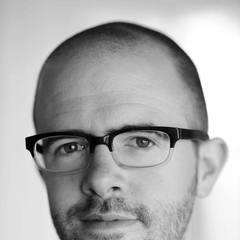
Brian Christian
Brian Christian

Brian Christian is an American author known for his insightful exploration of algorithms and artificial intelligence. His work delves into the impact of technology on human life and the role of algorithms in decision-making and creativity. more

You May Also Like

“Why does it disturb us that the map be included in the map and the thousand and one nights in the book of the Thousand and One Nights? Why does it disturb us that Don Quixote be a reader of the Quixote and Hamlet a spectator of Hamlet? I believe I have found the reason: these inversions suggest that if the characters of a fictional work can be readers or spectators, we, its readers or spectators, can be fictitious. In 1833, Carlyle observed that the history of the universe is an infinite sacred book that all men write and read and try to understand, and in which they are also written.”

“This connection of all created things with every single one of them and their adaptation to every single one, as well as the connection and adaptation of every single thing to all others, has the result that every single substance stands in relations which express all the others. Whence every single substance is a perpetual living mirror of the universe.”

“4.19. Dedekind's approach is a singular combination of Descartes' Cogito and the idea of the idea in Spinoza. The starting point is the very space of the Cogito, as 'closed' configuration of all possible thoughts, existential point of pure thought. It is claimed (but only the Cogito assures us of this) that something like the set of all my possible thoughts exists. From Spinoza's causal 'serialism' (regardless of whether or not he figured in Dedekind's historical sources) are taken both the existence of a parallelism' which allows us to identify simple ideas by way of their object (Spinoza says: through the body of which the idea is an idea), and the existence of a reflexive redoubling, which secures the existence of 'complex' ideas, whose object is no longer a body, but another idea. For Spinoza, as for Dedekind, this process of reflexive redoubling must go to infinity. An idea of an idea (or the thought of a thought of an object) is an idea. So there exists an idea of the idea of a body, and so on.”