Quotessence
Home / Quotes / Quote by Tim O'Brien

Quote by Tim O'Brien

“You learn, finally, that you'll die, and so you try to hang on to your own life, that gentle, naive kid you used to be, but then after a while the sentiment takes over, and the sadness, because you know for a fact that you can't ever bring any of it back again. You just can't.”

Quote by Tim O'Brien

Work

The Things They Carried

This poignant collection of short stories explores the lives of soldiers during the Vietnam War, highlighting the physical and emotional toll of their experiences. The characters grapple with the weight of memories, fear, and the enduring impact of their time in combat. more

Author
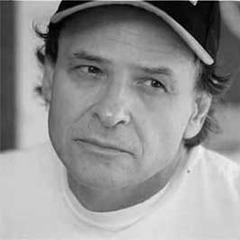
Tim O'Brien
Tim O'Brien

Tim O'Brien is an American novelist born on October 1, 1946. His works, set against the backdrop of the Vietnam War, explore themes of war and memory through personal experiences and fictional narratives. O'Brien's writing style is unique, utilizing nonlinear storytelling and metafictional techniques. more

You May Also Like

“I know more about my father than I used to know: I know he wanted to be a pilot in the war but could not, because the work he did was considered essential to the war effort… I know he grew up on a farm in the backwoods of Nova Scotia, where they didn’t have running water or electricity. This is why he can build things and chop things… He did his high school courses by correspondence, sitting at the kitchen table and studying by the light by a kerosene lamp; he put himself through university by working in lumber camps and cleaning out rabbit hutches, and was so poor he lived in a tent in the summers to save money… All this is known, but unimaginable. Also I wish I did not know it. I want my father to be just my father, the way he has always been, not a separate person with an earlier, mythological life of his own. Knowing too much about other people puts you in their power, they have a claim on you, you are forced to understand their reasons for doing things and then you are weakened.”

“As he left Yata’s home that morning, he knew that a part of his life was complete and that whatever path he chose, he would experience the ache of unfulfilled dreams. For a moment he allowed himself to feel regret at the thought of never building a cottage by the river with Trevanion. Or living the life of a simple farmer connected to the earth. Or traveling his kingdom, satisfying the nomad he had become. To be Finnikin of the Rock and the Monts and the River and the Flatlands and the Forest. To be none of those at all. Yet he also knew that to lose her to another man would be a slow torture every day for the rest of his life.”

“In a way, losing hope and losing importance are the same thing. It is that youthful vibrance, that eternal longing and believing, that makes youth so important--if you grow old and lose that without finding another way to be important, you will slip away, fall into insignificance, like one sheet of paper. You may be useful, but you will never stand out from the crowd. You cannot look at a piece of paper and say, "I remember you." You never can.”

“There are only two things that determine whether you're old enough to do something -- whether you understand what the hell you're getting yourself into -- and whether you're willing to accept responsibility for it if it blows up in your face. How many years you've been alive is ultimately meaningless -- except in as much as it gives parents a general sort of idea as to whether their child is likely to understand what they're getting themselves into. Small children, for instance, can't really comprehend shades of grey -- where a decision or choice can have different answers depending on the circumstances. For them, everything is black and white.”