Quotessence
Home / Quotes / Quote by Judith Lewis Herman

Quote by Judith Lewis Herman

“This book appears at a time when public discussion of the common atrocities of sexual and domestic life has been made possible by the women’s movement, and when public discussion of the common atrocities of political life has been made possible by the movement for human rights. I expect the book to be controversial—first, because it is written from a feminist perspective; second, because it challenges established diagnostic concepts; but third and perhaps most importantly, because it speaks about horrible things, things that no one really wants to hear about.”

Quote by Judith Lewis Herman

Work

Author

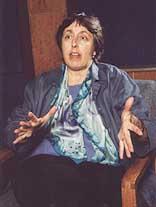
Judith Lewis Herman
Judith Lewis Herman

Judith Lewis Herman is an American author renowned for her work in the field of psychological trauma. Her writings delve deeply into the impact of post-traumatic stress disorder (PTSD) and the effects of traumatic experiences on individuals and society. more

You May Also Like

“Sometimes, love isn’t about grand gestures or fiery passion—it’s about quiet understanding, small moments, and the choice to stay. As Sabi stands on her balcony, the morning sun warming her skin, she reflects on the changes since that fateful night. The air carries the scent of jasmine, a contrast to the storm that once raged within her. There were no dramatic confrontations, only space—to heal, to see what had always been there. The silence, once heavy, now feels comforting. In Sujit’s quiet gestures—his careful preparation of her tea, the soft shawl draped over her shoulders, the way he listens without expectation—Sabi notices the tenderness she once overlooked. Watching him tend to his roses below, she realizes he doesn’t need to look up; he knows she’s there. That quiet certainty settles something deep within her. She had once been drawn to passion’s intensity, mistaking fire for love. But flames consume, leaving only ashes. Sujit’s presence, steady and unspoken, teaches her love isn’t about burning bright—it’s about enduring warmth. It’s a love that doesn’t demand but offers, a love that whispers, I see you, and I am here.”

“Sitting with Ricki [Abrams], talking with Ricki, I made a vow to her: that I would use everything I knew, including from prostitution, to make the women`s movement stronger and better; that I`d give my life to the movement and for the movement. I promised to honour-bound to the well-being of women, to do anything necessary for that well-being. I promised to live and to die if need be for women. I made that vow some thirty years ago, and I have not betrayed it yet.”

“The suffragettes were easy to condemn, but hard to ignore. Their actions also boosted donations to peaceful, law-abiding suffragist societies. Many of those who claimed to be repelled by the militants were what we would now call "concern trolls" pretending to care about the success of a movement they never supported anyway.”

“It's a story that many would consider perfectly ordinary...Yet there is another story of my life; one that I believe is as inspiring as any other. I wish I had claimed it more publicly and told it more proudly. It's the story of a revolution. I was born right when everything was changing for women....I came along at just the right moment, like a surfer catching the perfect wave. Everything I am, everything I've done, so much of what I stand for flows from that happy accident of fate. I know for a lot of people, including a lot of women, the movement for women's equality exists largely in the past. They're wrong about that. It's still happening, still as urgent and vital as ever. And it was and is the story of my life--mine and millions of other women's. We share it. We wrote it together. We're still writing it.”

“If only the court had acted more slowly,’ RBG said, and cut down one state law at a time the way she had gotten them to do with the jury and benefit cases. The justices could have been persuaded to build an architecture of women’s equality that could house reproductive freedom. She said the very boldness of Roe, striking down all abortion bans until viability, had ‘halted a political process that was moving in a reform direction and thereby, I believe, prolonged divisiveness and deferred stable settlement of the issue. (85).”

“Sean's a creep! You're better than this!" She stands, glaring at me. "I am better than this. I'm better than Sean, and I'm better than the Watchers, and you have no idea what I'm doing, so keep your judgy eyebrows to yourself." "My eyebrows are not judgy!" "Your eyebrows are so judgy they might as well have a gavel!" We both glare at each other. I crack first. "Can they have a frilly white collar like Ruth Bader Ginsburg?" She tries to hold her stern look, but the edges are trembling. "No. Your eyebrows have to wear a huge gross wig because we're not in the USA, we're in Ireland." I snort, which turns into a giggle. Artemis was never one for giggling, but even she grins at me, and for a few precious moments we're each other's again.”

“It's easy to blame the patriarchy, to rightfully point at the men who rape and hold them accountable. What's harder is to notice the women who sometimes passively direct rapists toward their victims by contributing to the hypersexualization of women of color under the guise of empowerment... Feminist white women who think "sexy Pocahontas" is an empowering look instead of lingering fetishization of the rape of a child. The same imagery they claim to find sexually empowering is rooted in the myth of white women's purity and every other woman's sexual availability.”