Quotessence
Home / Quotes / Quote by Joseph Campbell

Quote by Joseph Campbell

“The figure of the tyrant monster is known to the mythologies, folk traditions, legends, and even nightmares of the world, and his characteristics are everywhere essentially the same. He is the hoarder of the general benefit, he is the monster avid for the greedy rites of my and mine. The havoc wrought by him is described in mythology and fairy tales as being universal throughout his domain. This may be no more than his household, his own tortured psyche, or the lives that he blights with the touch of his friendship and assistance, or it may amount to the extent of his civilization. The inflated ego of the tyrant is a curse to himself and to his world, no matter how his affairs may seem to prosper. Self-terrorized, fear haunted, the giant of self-achieved independence is the world's messenger of disaster, even though in his mind he may entertain himself with humane intentions.”

Quote by Joseph Campbell

Work

The Hero with a Thousand Faces

Browse quotes and source details for this work. more

Author
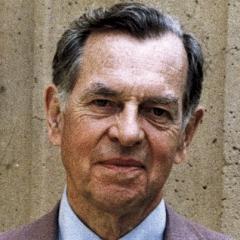
Joseph Campbell
Joseph Campbell

Joseph Campbell was an American writer, scholar, and mythologist, renowned for his studies of world mythology. His work, 'The Hero with a Thousand Faces', has had a profound impact on modern culture, widely used in literature, film, and psychology fields. more

You May Also Like

“She’s confident in her abilities. But that’s not where I hit her. It’s called dissonance. You believe one thing deeply enough that it’s central to your identity. Then something, me, steps in to challenge that belief. It’s a hell of a leap of faith to go from believing something and understanding how much of the world works, to saying ‘I don’t know’. Some deny, and you can get stupid-as-hell behaviors from those who see something plain as day but deny it because it conflicts with something they believe. Some get angry, some distract themselves until they can figure out how to deal with it… but very few will turn around and throw themselves headlong into more questions. More dissonance.”

“Lisa was thinking, as she climbed the apparently unending staircase, the she had taken pretty long odds. She had not hesitated to buck the Tiger, Life. Simon Iff had warned her that she was acting on impulse. But--on the top of that--he had merely urged her to be true to it. She swore once more that she would stick to her guns. The black mood fell from her. She turned and looked upon the sea, now far below. The sun, a hollow orb of molten glory, hung quivering in the mist of the Mediterranean; and Lisa entered for a moment into a perfect peace of spirit. She became once with Nature, instead of a being eternally at war with it.”

“You have a consistent character yourself and you wish all the facts of life to be consistent, but they never are. For instance you despise public service because you want work always to correspond to its aims, and that never happens. You also want the activity of each separate man to have an aim, and love and family life always to coincide––and that doesn't happen either. All the variety, charm and beauty of life are made up of light and shade.”

“Consider yourself and the cello. As you play the music moves out to the listener, and also enters the core of your own being, for somehow you are tuned to the cello. Well, I am persuaded that this is because you are a chord. I am a chord. Our DNA dictates our physicality-made up of billions of little notes-on a basic level. Add to that our geography, background et cetera, and you have your original score. Life is the layering of chords, but the underlying one that we are will never change. This brings us to string theory and love. Our personal chord resonates with the personal ones of others, and sometimes we encounter another person who is completely harmonious with us. It is a dominant, overwhelming attraction on the DNA level. However, such a person can appear to be our opposite-and that's where this 'opposites attract' notion comes from-because they have tuned their chord in a different way. In reality, we are attracted to the person we have chosen not to become, an alternative adjustment to a chord that is nearly the same as our own. The clashing portions of the chords sounding together advance the richness of it. So when you make love you aren't expressing emotions or showing affection, you are merging melodies. You are players in the same symphony.”

“Did I live? The human world is like a vast musical instrument on which we play our individual part while simultaneously listening to the compositions of others in an effort to contribute to the whole. We don't chose whether to engage, only how to; we either harmonize or create dissonance. Our words, our deeds, our very presence create and leave impressions in the minds of others just as a writer makes impressions with their words. Who you are is an unfolding narrative. You came from nothing and will return there eventually. Instead of taking ourselves so seriously all the time, we can discover the playful irony of a story that has never been told in quite this way before. -- Stephen Batchelor, Buddhism Without Beliefs”