Quotessence
Home / Quotes / Quote by Philip Gourevitch

Quote by Philip Gourevitch

Work

Author

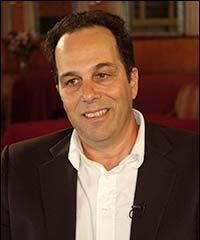
Philip Gourevitch
Philip Gourevitch

Philip Gourevitch, born on January 1, 1961, is an American author known for his in-depth investigative reporting and literary narrative. His work, particularly his coverage of conflicts in Africa, has garnered widespread acclaim. more

You May Also Like

“...Five out of 6 children who had been in Rwanda during the slaughter had witnessed bloodshed... Imagine what the totality of such devastation means for a society and it becomes clear that Hutu Power's crimes was much greater than the murder of nearly a million people. Nobody in Rwanda escaped direct physical or psychic damage. The terror was designed to be total and enduring, a legacy to leave Rwandans spinning and disoriented in the slipstream of their memories for a very long time to come, and in that it was successful.”

“Never before in modern memory had a people who slaughtered another people, or in whose name the slaughter was carried out, been expected to live with the remainder of the people that was slaughtered, completely intermingled, in the same tiny communities, as one cohesive national society.”

“The last time I heard an orthodox Marxist statement that was music to my ears was from a member of the Rwanda Patriotic Front, during the mass slaughter in the country. 'The terms Hutu and Tutsi,' he said severely, 'are merely ideological constructs, describing different relationships to the means and mode of production.' But of course!”

“The UN lacked the ability to act without the support of its more powerful members, notably the United States. The American government wanted to avoid a repetition of its unsuccessful intervention in Somalia, in which thirty American troops were killed. President Clinton issued a directive on UN military conditions. The operations would also have to be directly relevant to American interests. These conditions excluded American support for UN intervention to stop the genocide [in Rwanda].”

“Rwanda’s Muslim community is an example of a group (a full community rather than isolated individuals) that resisted the appeal of dangerous speech and other pressures to participate in the genocide. The Muslim community, which had both Hutu and Tutsi members, not only refused to participate in the genocide but actively opposed it. Its actions during the genocide included rescuing, hiding, and taking care of Muslim and non-Muslim Tutsis, and providing safe haven in mosques. Muslims also rejected commands to kill or reveal Tutsis hidden in their communities, on several occasions going so far as to fight back and be killed themselves.”