Quotessence
Home / Quotes / Quote by Esi Edugyan

Quote by Esi Edugyan

“The level of advocacy on behalf of others is a rarity -- and sorely needed. The work of equality is the labour not of the few but the many, including those who have benefited and continue to benefit the most from an unequal system. Change that must take place on a broad social scale must be just that -- broadly social. Everyone has their part to play. But it is not for advocates to occupy spaces intended for the very people they are fighting for.”

Quote by Esi Edugyan

Work

Out of the Sun: On Race and Storytelling

Browse quotes and source details for this work. more

Author
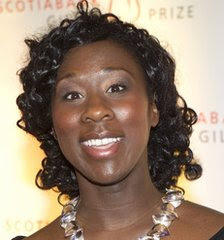
Esi Edugyan
Esi Edugyan

Esi Edugyan is a Canadian novelist born in Ethiopia in 1977, who later moved to Canada with her family. Her works are known for their profound character development and rich cultural background. She has won multiple literary awards. more

You May Also Like

“Now, the only song a woman knows is the song she learns at birth, a sorrowin’ song, with the words all wrong, in the many tongues of Earth. The things a woman wants to say, the tales she longs to tell . . . they take all day in the tongues of Earth, and half of the night as well. So nobody listens to what a woman says, except the men of power who sit and listen right willingly, at a hundred dollars an hour . . . sayin’ “Who on Earth would want to talk about such foolish things?” Oh, the tongues of Earth don’t lend themselves to the songs a woman sings! There’s a whole lot more to a womansong, a whole lot more to learn; but the words aren’t there in the tongues of Earth, and there’s noplace else to turn. . . . So the woman they talk, and the men they laugh, and there’s little a woman can say, but a sorrowin’ song with the words all wrong, and a hurt that won’t go away. The women go workin’ the manly tongues, in the craft of makin’ do, but the women that stammer, they’re everywhere, and the wellspoken ones are few. . . . ’Cause the only song a woman knows is the song she learns at birth; a sorrowin’ song with the words all wrong, in the manly tongues of Earth. (a 20th century ballad, set to an even older tune called “House of the Rising Sun”; this later form was known simply as “Sorrowin’ Song, With the Words All Wrong”)”

“Part of this rise of individualism is evident in the mistrust about the social support of vulnerable social groups, such as lone parents, and elderly, or unemployed, people, and in the suggestion that a 'nanny state' was emerging because 'too many' people were dependant on state benefits. (This is in context of a world economy that is creating mass unemployment, where support for the family has consistently been undermined, where elderly people have had services withdrawn that allowed them to be cared for by their families, and so on.) In other words, the ethic of social support being undermined by 'rugged individualism' results in blaming the victim for their own difficulties.”

“Among the many vital jobs to be done, the nation must not only radically readjust its attitude toward the Negro in the compelling present, but must incorporate in its planning some compensatory consideration for the handicaps he has inherited from the past. It is impossible to create a formula for the future which does not take into account that our society has been doing something special against the Negro for hundreds of years. How then can he be absorbed into the mainstream of American life if we do not do something special for him now, in order to balance the equation and equip him to compete on a just and equal basis? Whenever this issue of compensatory or preferential treatment for the Negro is raised, some of our friends recoil in horror. The Negro should be granted equality, they agree; but he should ask nothing more. On the surface, this appears reasonable, but it is not realistic. For it is obvious that if a man is entered at the starting line in a race three hundred years after another man, the first would have to perform some impossible feat in order to catch up with his fellow runner.”