Quotessence
Home / Quotes / Quote by Gustave Flaubert

Quote by Gustave Flaubert

“Pleasures, like schoolboys in a school courtyard, had so trampled upon his heart that no green thing grew there, and that which passed through it, more heedless than children, did not even, like them, leave a name carved upon the wall.”

Quote by Gustave Flaubert

Work

madame bovary

Gustave Flaubert's Madame Bovary is a seminal work of 19th-century French literature. The novel follows the life of Emma Bovary, a woman who is discontent with her provincial life and marries Charles Bovary, a dull and unambitious country doctor. Emma's dissatisfaction leads her to seek fulfillment through romantic escapades and extramarital affairs, ultimately leading to disaster. Flaubert's meticulous attention to detail and his exploration of themes such as social class, materialism, and the human condition have made this novel a classic of world literature. more

Author

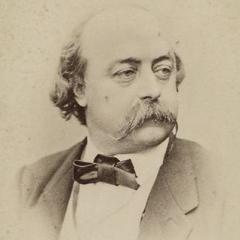
Gustave Flaubert
Gustave Flaubert

Gustave Flaubert, born on December 12, 1821 and died on May 8, 1880, was a prominent French writer of the 19th century. Known for his exquisite literary skills and profound psychological portrayals, Flaubert is best remembered for his masterpiece 'Madame Bovary'. more

You May Also Like

“Nothing will ever equal that moment of joyous excitement which filled my whole being when I felt myself flying away from the earth. It was not mere pleasure; it was perfect bliss. Escaped from the frightful torments of persecution and of calumny, I felt that I was answering all in rising above all. [Said after making man's first ascent by hydrogen balloon in 1783]”

“When we are faced with circumstances, He gives us the Power to endure! When we are faced with loss, He grants us the Poise to hold on. When we come across failure, He installs back in us the Potential to rise up again. When we meet death, He gave us the Pleasure to be carried up into the Lovely coasts of eternity!”

“Pleasure and pain are immediate; knowledge, retrospective. A steel ball, suspended on a string, smacks into its brothers and nothing happens: no shock of recognition, no sudden epiphany. We go about our business, buttering the toast, choosing gray socks over brown. But here's the thing: just because we haven't understood something doesn't mean we haven't been shaped by it.”

“सदृशं चेष्टते स्वस्याः प्रकृतेर्ज्ञानवानपि। प्रकृतिं यान्ति भूतानि निग्रहः किं करिष्यति॥ ॥३- ३३॥ इन्द्रियस्येन्द्रियस्यार्थे रागद्वेषौ व्यवस्थितौ। तयोर्न वशमागच्छेत्तौ ह्यस्य परिपन्थिनौ॥ ॥३- ३४॥ `Each is prone to follow his nature, His senses stormed by earthly pleasure, Submit not to them they be your foe, Else you will reap what ever you sow.’ 3. 33-34”

“It is the thought that the least efficient way of of finding either happiness or pleasure is to pursue them. Put in terms of happiness, we can see it like this: To be happy you must quite literally "lose yourself". You must lose yourself in some pursuit; you need to forget your own happiness and find other goals and projects, other objects of concern that might include the welfare of some other people, or the cure of the disease, or simply in the variety of everyday activities with their little successes and setbacks.”