Quotessence
Home / Quotes / Quote by Giuseppe Tomasi di Lampedusa

Quote by Giuseppe Tomasi di Lampedusa

“Noi fummo i Gattopardi, i Leoni; quelli che ci sostituiranno saranno gli sciacalletti, le iene; e tutti quanti gattopardi, sciacalli e pecore, continueremo a crederci il sale della terra." ("We were the Leopards, the Lions; those who'll take our place will be little jackals, hyenas; and the whole lot of us, Leopards, jackals, and sheep, we'll all go on thinking ourselves the salt of the earth.")”

Quote by Giuseppe Tomasi di Lampedusa

Work

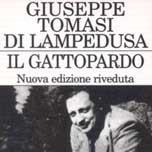
The Leopard

A classic novel set in the final days of the Italian monarchy, it follows the life of a nobleman as he navigates the shifting political landscape and the decline of his family's power. The story is rich in historical detail and psychological insight, offering a poignant reflection on the end of an era. more

Author

Giuseppe Tomasi di Lampedusa

Giuseppe Tomasi di Lampedusa was an Italian writer, best known for his novel 'The Leopard'. His works often revolve around the lives of the aristocracy, offering profound insights into social change and human nature. more

You May Also Like

“Scientists say that the palm tree line, that is the climate suitable to growth of the palm, is moving north, five hundred metres, I think it was, every year...The palm tree line...I call it the coffee line, the strong black coffee line...It's rising like mercury in a thermometer, this palm tree line, this strong coffee line, this scandal line, rising up throughout Italy and already passed Rome...”

“There's a proverb, a maxim, that runs, 'The dead man is dead; let's give a hand to the living.' Now, you say that to a man from the North, and he visualizes the scene of an accident with one dead and one injured man; it's reasonable to let the dead man be and to set about saving the injured man. But a Sicilian visualizes a murdered man and his murderer, and the living man who's to be helped is the murderer.”

“…”The Emersons who were at Florence, do you mean? No, I don’t suppose it will prove to be them. It is probably a long cry from them to friends of Mr. Vyse’s. Oh, Mrs. Honeychurch, the oddest people! The queerest people! For our part we liked them, didn’t we?” He appealed to Lucy. “There was a great scene over some violets. They picked violets and filled all the vases in the room of these very Miss Alans who have failed to come to Cissie Villa. Poor little ladies! So shocked and so pleased. It used to be one of Miss Catharine’s great stories. ‘My dear sister loves flowers,’ it began. They found the whole room a mass of blue — vases and jugs — and the story ends with ‘So ungentlemanly and yet so beautiful.’ It is all very difficult. Yes, I always connect those Florentine Emersons with violets.”…”