Quotessence
Home / Quotes / Quote by Ambrose Bierce

Quote by Ambrose Bierce

Work

The Unabridged Devil's Dictionary

This book is a compilation of witty and often irreverent definitions, challenging conventional meanings and offering a critical commentary on society and human nature. It is a work of literary wit and social critique, celebrated for its clever wordplay and sharp observations. more

Author
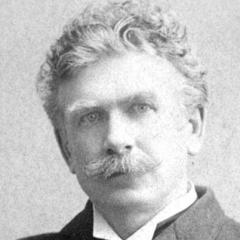
Ambrose Bierce
Ambrose Bierce

Ambrose Bierce was an American journalist, satirist, and editor, renowned for his sharp wit and dark humor. He is best known for his satirical novel 'The Devil's Dictionary' and his short stories. Bierce was born on June 24, 1842, and his exact date of death remains unknown, as he disappeared during the American Civil War. more

You May Also Like

“About 35-40% of the time, a player wants to create a word ending in a specific letter. This, however, is not the way we traditionally think, and, not to mention, this is not the way dictionaries are sorted. In other words, in many situations, conventional dictionaries are not arranged in an easy to use manner. This dictionary solves that problem by sorting on the last letter of the word.”

“FV: Annandale defines 'definition' as "an explanation of the signification of a term." Yet Oxford, on the other hand, defines it as "a statement of the precise meaning of a word." A small, perhaps negligible difference you might think. And neither, would you say, is necessarily more correct than the other? But now look up each of the words comprising each definition, and then the definitions of those definitions, and so on. Some still may only differ slightly, while others may differ quite a lot. Yet any discrepancy, large or small, only compounds that initial difference further and further, pushing each 'definition' farther apart. How similar are they then at the end of this process...assuming it ever would end? Could we possibly even be referring to the same word by this point? And we still haven't considered what Collins here...or Gage, or Funk and Wagnalls might have to say about it. Off on enough tangents and you're eventually led completely off track. ML: Or around in circles. FV: Precisely! ML: Oxford, though, is generally considered the authority, isn't it? FV: Well, it's certainly the biggest...the most complete. But then, that truly is your vicious circle - every word defined...every word in every definition defined...around and around in an infinite loop. Truly a book that never ends. A concise or abridged dictionary may, at least, have an out... ML: I wonder, then, what the smallest possible "complete dictionary" would be? Completely self-contained, that is, with every word in every definition accounted for. How many would that be, do you suppose? Or, I guess more importantly, which ones? FV: Well, that brings to mind another problem. You know that Russell riddle about naming numbers?”

“Since language was increasingly believed to be the semiotic system which could be analyzed with the most profit […] and the system which could serve as a model for all other systems […] the model of the linguistic sign gradually came to be seen as the semiotic model par excellence. // By the time this conclusion was reached ( the definitive sanction took place with Saussure), the linguistic model was crystallized into its 'flattest' form, the one encouraged by the dictionaries and, unfortunately, by a lot of formal logic which had to fill its empty symbols only for the sake of exemplification as well. As a consequence, the notion of meaning as synonymy and as essential definition began to develop.”