Quotessence
Home / Quotes / Quote by Elie Wiesel

Quote by Elie Wiesel

“You can't be serious. Your temple was destroyed two thousand years ago and you're grieving today?” Yes, as if it had happened only yesterday. “A lot of people have told me the Jews were crazy,” she said. “They were right.” Yes, we're crazy. “It's human nature to forget what hurts you, isn't it? Wasn't forgetfulness a gift of the gods to the ancient world? Without it, life would be intolerable, wouldn't it?” Yes, but the Jews live by other rules. For a Jew, nothing is more important than memory. He is bound to his origins by memory. It is memory that connects him to Abraham, Moses and Rabbi Akiba. If he denies memory he will have denied his own honor. “So you insist on keeping all your wounds open?” Those wounds exist; it is therefore forbidden and unhealthy to pretend that they don't.”

Quote by Elie Wiesel

Work

The Forgotten

In 'The Forgotten,' the reader is taken on a journey through the enigmatic and often overlooked aspects of history, exploring the lives and legacies of individuals who have been overshadowed by time. The narrative weaves together tales of resilience, loss, and the enduring power of memory, offering a poignant look at the human condition. more

Author
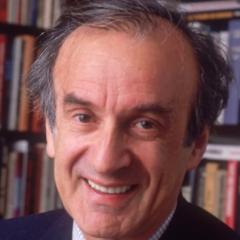
Elie Wiesel
Elie Wiesel

A renowned Jewish author and Nobel Peace Prize laureate, Elie Wiesel is known for his profound literary achievements and for recording and spreading the history of the Holocaust as a survivor. His works deeply reveal the terror of the Nazi Holocaust and the universal nature of human suffering. more

You May Also Like

“Mina morbröder skämtade och skojade och parodierade sig själva genom att härma min mormors bakvända språkbruk. Efter några timmars vilda upptåg var släkten helt förvandlad och raglade omkring av ordberusning. I deras tillstånd av praktisk surrealism blommade den judiska humorn och försatte mig i en nästan svindlande extas. Jazzpianisten spelade klarinett och ingenjören hanterade det enradiga dragspelet medan de övriga slog på kastrullock och spelade på kam. Med rytmen sprittande i kroppen tvingade jag fram fiolen ur likkistan och lät stråken glida över fårtarmarna. Och jag frambringade toner som endast en tvättäkta neger kunde uppskatta. Det var rytmkänslan som brusade fram utan musikaliska ambitioner. Min högsta önskan var att bli neger.”

“بل وصل الحال فى عهد معاوية أن دخل عليه أحدهم وهو فى مجلس الخلافة فحياه قائلا : السلام عليك أيها الأجير.وعندما اعترض عليه نفر من الجالسين أصر على مقولته متسائلا: ألم يستأجرك الله لرعاية هذه الأمه؟.وهو ذاته الذى هب فى وجه معاوية عندما حبس بعض الهبات المالية عن المسلمين وقال له أمام الجميع: كيف تمنع العطاء وأنه ليس من كدك ولا من كد أبيك ولا من كد أمك؟!”

“Saints, unknown to early Islam, became numerous in Sufism. One of the earliest was a woman, Rabia al-Adawiyya of Basra (717-801). Sold as a slave in youth, she was freed because her master saw a radiance above her head while she prayed. Refusing marriage, she lived a life of self-denial and charity. Asked if she hated Satan, she answered, "My love for God.1eaves me no room for hating Satan." Tradition ascribes to her a famous Sufi saying: "0 God! Give to Thine enemies whatever Thou hast assigned to me of this world's goods, and to Thy friends whatever Thou hast assigned to me in the life to come; for Thou Thyself art sufficient for me.”

“Muslims are assured in the Qur’ân, ‘You have become the best community ever raised up for mankind, enjoining the right and forbidding the wrong, and having faith in God’ (III, 110). Earnest men have taken this prophecy seriously to the point of trying to mould the history of the whole world in accordance with it. Soon after the founding of the faith, Muslims succeeded in building a new form of society, which in time carried with it its own distinctive institutions, its art and literature, its science and scholarship, its political and social forms, as well as its cult and creed, all bearing an unmistakable Islamic impress. In the course of centuries, this new society spread over widely diverse climes, throughout most of the Old World. It came closer than any had ever come to uniting all mankind under its ideals.”