Quotessence
Home / Quotes / Quote by Leo Tolstoy

Quote by Leo Tolstoy

“I suffered most from the feeling that custom was daily petrifying our lives into one fixed shape, that our minds were losing their freedom and becoming enslaved to the steady passionless course of time.”

Quote by Leo Tolstoy

Work

Семейное счастие

Browse quotes and source details for this work. more
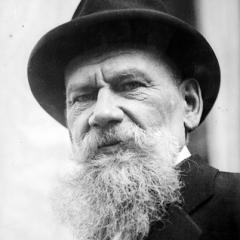
Author

Leo Tolstoy
Leo Tolstoy

Leo Tolstoy was a Russian writer and thinker, a prominent representative of 19th-century Russian literature. His works deeply revealed social contradictions and human nature, and had a profound impact on the world. more

You May Also Like

“بل وصل الحال فى عهد معاوية أن دخل عليه أحدهم وهو فى مجلس الخلافة فحياه قائلا : السلام عليك أيها الأجير.وعندما اعترض عليه نفر من الجالسين أصر على مقولته متسائلا: ألم يستأجرك الله لرعاية هذه الأمه؟.وهو ذاته الذى هب فى وجه معاوية عندما حبس بعض الهبات المالية عن المسلمين وقال له أمام الجميع: كيف تمنع العطاء وأنه ليس من كدك ولا من كد أبيك ولا من كد أمك؟!”

“Saints, unknown to early Islam, became numerous in Sufism. One of the earliest was a woman, Rabia al-Adawiyya of Basra (717-801). Sold as a slave in youth, she was freed because her master saw a radiance above her head while she prayed. Refusing marriage, she lived a life of self-denial and charity. Asked if she hated Satan, she answered, "My love for God.1eaves me no room for hating Satan." Tradition ascribes to her a famous Sufi saying: "0 God! Give to Thine enemies whatever Thou hast assigned to me of this world's goods, and to Thy friends whatever Thou hast assigned to me in the life to come; for Thou Thyself art sufficient for me.”

“Muslims are assured in the Qur’ân, ‘You have become the best community ever raised up for mankind, enjoining the right and forbidding the wrong, and having faith in God’ (III, 110). Earnest men have taken this prophecy seriously to the point of trying to mould the history of the whole world in accordance with it. Soon after the founding of the faith, Muslims succeeded in building a new form of society, which in time carried with it its own distinctive institutions, its art and literature, its science and scholarship, its political and social forms, as well as its cult and creed, all bearing an unmistakable Islamic impress. In the course of centuries, this new society spread over widely diverse climes, throughout most of the Old World. It came closer than any had ever come to uniting all mankind under its ideals.”

“At the beginning of the 19th century, all that the world knew of the history of the ancient Middle East was what preserved in Greek and Hebrew, that is to say by the only two peoples active in the ancient Middle East who had preserved continuity of identity into modern times, and who had retained and could still read their ancient writings. This history was part of their collective memory and was passed by them, with their scriptures and classics, to Christendom—but not to Islam, for Muslims read neither the Bible nor the classics. The name of Cyrus was well known in medieval Europe and appears even in the sagas of faraway Iceland. It does not appear in Islam, not even in Persia, where the pre-Islamic past was rejected and literally buried. The recovery was for long the work of European, later also of Russian and American, scholars, and was only gradually accepted by the Muslims of the Middle East.”