Quotessence
Home / Quotes / Quote by Sebastian Faulks

Quote by Sebastian Faulks

“There was a pretty young woman I used to see pegging out sheets and I worried that she would grow old there and that no one would know how beautiful she was. And maybe she would die without ever having really lived.”

Quote by Sebastian Faulks

Book:Engleby

Work

Engleby

Engleby is a character-driven narrative that follows the enigmatic Engleby as he navigates the complexities of his past and present. The story unfolds in a manner that invites readers to piece together the puzzle of Engleby's life, examining the impact of his actions and the secrets he keeps. more
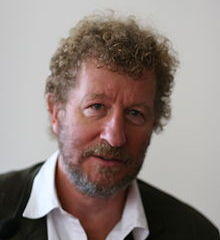
Author

Sebastian Faulks
Sebastian Faulks

Sebastian Faulks is a renowned British novelist known for his delicate writing style and profound character portrayals. His works cover a range of themes including World War II, love, and history, with 'Birdsong' and 'The Man Who Could Not Stop Laughing' being his most representative works. more

You May Also Like

“I may enter a zone of transcendence, in which I marvel at all the accidents of fate, since the beginning of life on earth, that led to my genes being created and my standing in this particular garden in a contemplative and imagining mind. I’ve been reading recently how reflection evolved. what a fascinating solution to the rigors of survival…how amazing that a few basic ingredients- the same ones that form the mountains, plants, and rivers- when arranged differently and stressed could result in us. More and more of late, I find myself standing outside of life, with a sense of the human saga laid out before me. it is a private vision, balanced between youth and old age, a vision in which I understand how caught up in striving we humans get, and a little of why, and how difficult it is even to recognize, since it feels integral to our nature and is. but I find it interesting that, according to many religions, life and begins and ends in a garden.”

“While the egg yolks cooled, he directed the beaters at the egg whites, setting the mixer on high speed that sent small bubbles giggling to the side of the bowl, where a few became many until they were a white froth rising up and then lying down again in patters and ridges, leaving an intricate design like the ribs of a leaf in the wake of the beaters”

“In the old age black was not counted fair, Or if it were, it bore not beauty’s name. But now is black beauty’s successive heir, And beauty slandered with a bastard shame. For since each hand hath put on nature’s pow'r, Fairing the foul with art’s false borrowed face, Sweet beauty hath no name, no holy bow'r, But is profaned, if not lives in disgrace. Therefore my mistress' eyes are raven black, Her eyes so suited, and they mourners seem At such who, not born fair, no beauty lack, Sland'ring creation with a false esteem. Yet so they mourn, becoming of their woe, That every tongue says beauty should look so.”

“Why does the social order feel the need to defend itself by evading the fact of real women, our faces and voices and bodies, and reducing the meaning of women to these formulaic and endlessly reproduced "beautiful" images? Though unconscious personal anxieties can be a powerful force in the creation of a vital lie, economic necessity practically guarantees it. An economy that depends on slavery needs to promote images of slaves that "justify" the institution of slavery. Western economies are absolutely dependent now on the continued underpayment of women. An idealogy that makes women feel "worth less" was urgently needed to counteract the way feminism had begun to make us feel worth more. This does not require a conspiracy; merely an atmosphere. The contemporary economy depends right now on the representation of women within the beauty myth.”