Quotessence
Home / Quotes / Quote by Michael Beckwith

Quote by Michael Beckwith

Author

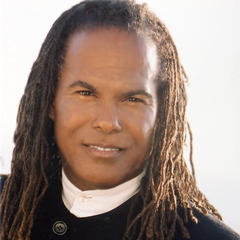
Michael Beckwith
Michael Beckwith

Michael Beckwith, born in 1956, is a renowned author. His works cover a wide range of topics including personal growth, spiritual exploration, and soul development, which have won the favor of many readers. more

You May Also Like

“You have a visitor, my lord." I frowned, "What?" "That is why I came in here. You have a visitor waiting for you." I stood up, exasperated. "Why didn't you say so?" Lacuna looked confused. "I did. Just now. You were there." She frowned thoughtfully. "Perhaps you have brain damage." "It would not shock me in the least," I said. "Would you like me to cut open your skull and check, my lord?" she asked. Someone that short should not be that disturbing.”

“One of the first unanswerable questions I asked was when I was eight years old. Some cousins of mine always said a prayer before eating: God is kind, God is good, And we thank him For our food. At that time we always heard the children in Europe were starving, therefore we should not waste any food. Two questions arose in my mind. First, what I knew about poetry was that it had to rhyme, and 'food' and 'good' didn't rhyme, so I always said 'Fud' with a silent sneer, and made it rhyme. Second: I once asked my aunt if god is good and we thank him for our Fud, why are the kids in Europe starving? I asked her if the kids in Europe were all bad. I remember her saying, 'Be thankful that you have food,' but, of course, she couldn't deal with the rest of it. I never accepted religion so I had nothing to reject as such. The history of 'Christiansanity' (my own coinage of which I am proud!) is so brutal of mind, emotions, freedom, progress, science, and all that I hold precious, that by any standards of justice its leaders in almost any given period would be incarcerated for life, or worse!”

“Pure mathematics consists entirely of assertions to the effect that, if such and such a proposition is true of anything, then such and such another proposition is true of that thing. It is essential not to discuss whether the first proposition is really true, and not to mention what the anything is, of which it is supposed to be true. [...] Thus mathematics may be defined as the subject in which we never know what we are talking about, nor whether what we are saying is true. People who have been puzzled by the beginnings of mathematics will, I hope, find comfort in this definition, and will probably agree that it is accurate.”