Quotessence
Home / Quotes / Quote by Greg Epstein

Quote by Greg Epstein

“We've also evolved the ability to simply 'pay it forward': I help you, somebody else will help me. I remember hearing a parable when I was younger, about a father who lifts his young son onto his back to carry him across a flooding river. 'When I am older,' said the boy to his father, 'I will carry you across this river as you now do for me.' 'No, you won't,' said the father stoically. 'When you are older you will have your own concerns. All I expect is that one day you will carry your own son across this river as I no do for you.' Cultivating this attitude is an important part of Humanism--to realize that life without God can be much more than a series of strict tit-for-tat transactions where you pay me and I pay you back. Learning to pay it forward can add a tremendous sense of meaning and dignity to our lives. Simply put, it feels good to give to others, whether we get back or not.”

Quote by Greg Epstein

Work

Good Without God: What a Billion Nonreligious People Do Believe

This book delves into the diverse range of beliefs and ethical frameworks embraced by nonbelievers, offering an insightful look into the spiritual and philosophical underpinnings of a billion individuals who do not identify with any organized religion. more

Author
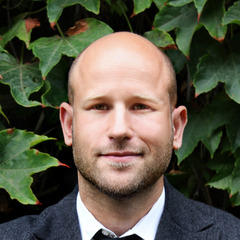
Greg Epstein
Greg Epstein

Greg Epstein, born in 1977, is an American Jewish chaplain known for his leadership role in secular communities. He is dedicated to promoting religious freedom and secular humanism. more

You May Also Like

“Although Sicily in July can be a furnace, there can be cool nights by the sea, and up in the hills of Mount Etna. I allow myself to feel a tantalizing hope we might head up there. There is something thrilling about the pull of the volcano towering over the Sicilian coastline, constantly puffing steam and fiery red ash like a sleeping dragon, while farmers and villagers quietly live and work, aware that she can wake at any moment.”

“My first encounter with the bittersweet taste of the Moro, a Sicilian blood orange, was sitting outside under a gnarled olive tree, during the height of a June heat wave. Small puffs of cloud the only blemish in the otherwise perfect blue sky, the bloodred flesh yielding a juice so refreshing it felt as close to perfect as I've ever come. The second encounter came at a fish market in Catania, where a group of men in flat caps spooned red-orange mounds of Moro granita into their mouths between games of cards. I was back in my dad's world, and the memories of oranges were everywhere.”

“Sicily--- Oranges, pistachios, and/or aubergine. Sicilian food a product of immense, diverse history. Have sardines! Try the orange cake. You'll find it all over, but there used to be a good one in Taormina. I shake my head in amazement. Somehow, it feels like Dad had been quietly guiding me. Tuscany--- Wild boar is good but tomatoes are better. Nothing else! Please say something with Chiara's tomatoes. I want to help her. Farm is a century old and sells some obscure varieties. Tomato salads, tomato bread soup, panzanella. And here too, Leo and I had organically found the path my father laid out for us. The notes on Liguria are less specific, but when I read his scrawled handwriting, I smile to myself. Liguria--- Was thinking about beans, but basil a good opinion. Oh boy, I cannot wait to show that note to Leo. Basil a good option! Leo. I sit and write with an open heart, not shying away from treacly memories of cut oranges shared in the sea. Pushing my cynicism to the side and allowing the love I have for food, for Italy, for my father, to run from my heart down my veins to my fingers and onto the page.”

“You texted Garcia for help?" Jack gritted out. "Garcia? Not me?" "He has a gun." "So do I." "He's steady and reliable," I said. "He doesn't disappear for eight months. He doesn't go on business trips that require burner phones and secret codes. He doesn't refuse to tell me what he does for a living. I texted HELP and I knew he'd come. I wasn't sure about you." "You don't think I would have come if you'd texted me for help?" Indignation laced Jack's tone. "For all I knew, you were being tossed out a window in Rio, tortured by the Italian Mafia in Tuscany, or you were in the North Sea trapped in a Russian submarine." "The Italian Mafia are based in Sicily," he corrected me. "Tuscany doesn't have the port access they need for the drug trade." I folded my arms and sighed. "You missed the point entirely.”

“It was an overcast day, but the cloudy weather did not detract from the signs of spring that were evident all around them. It was the second week in March, and the official start of the season was just a couple of weeks away. The magnolia trees had already bloomed, and tulips, daffodils, and wildflowers were shooting up all around the convent's gardens.”

“One encounters in the streets, late at night on the evenings of fetes, the most strange and bizarre passers-by. Do these nights of popular celebration cause ancient and forgotten avatars to stir in the depths of the human soul? This evening, in the movement of the sweaty and excited crowd, I am certain that I passed between the masks of the liberated Bythinians and encountered the courtesans of the Roman decadence. There emerged, this evening, from that swarming esplanade of Des Invalides - amid the crackle of fireworks, the shooting stars, the stink of frying, the hiccuping of drunkards and the reeking atmosphere of menageries - the wild effusions of one of Nero's festivals. It was like the odour of a May evening on the Basso-Porto of Naples. It was easy to believe that the faces in that crowd were Sicilian.”

“Culturally, however, Sicily had great advantages. Muslim, Byzantine, Italian, and German civilization met and mingled there as nowhere else. Greek and Arabic were still living languages in Sicily. Frederick learnt to speak six languages fluently, and in all six he was witty. He was at home in Arabian philosophy, and had friendly relations with Mohammedans, which scandalized pious Christians. He was a Hohenstaufen, and in Germany could count as a German. But in culture and sentiment he was Italian, with a tincture of Byzantine and Arab. His contemporaries gazed upon him with astonishment gradually turning into horror; they called him ‘wonder of the world and marvellous innovator’.”