Quotessence
Home / Quotes / Quote by Bell Hooks

Quote by Bell Hooks

Work

The Will to Change: Men, Masculinity, and Love

This book delves into the societal constructs of masculinity and how they influence men's experiences in love and life. It examines the challenges and opportunities for change in the context of personal development and intimate relationships. more

Author
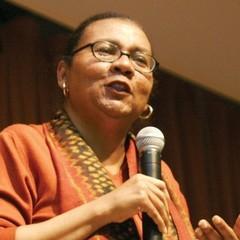
Bell Hooks
Bell Hooks

Bell Hooks, born Gloria Jean Watkins, is an American author, scholar, and activist. Her work primarily focuses on issues of race, gender, and social justice, particularly on feminist and black feminist thought. Hooks' works include novels, poetry, academic writings, and autobiographies, and her writing style is beloved by readers for its profound social insight and desire for change. more

You May Also Like

“Feminists believe that women should be protected from certain aspects of public life, including speech..... Feminists do not want to engage in aspects of life they disagree with. Instead, they want to silence what they don’t like through censorship and criminalisation. Feminists believe that women need protection from words. Finally, contemporary feminists do not believe that women are independent, free-thinking individuals. Feminists promote a cliquey, sisterhood mentality, but not through a collective and positive sharing of ideas. They’re the kind of group you’d encounter at school who would shun you if you weren’t wearing the right kind of hairband. Today’s feminism is opposed to criticism and nuance, refusing to allow women to form their own opinions or challenge preconceived ideas.”

“Claiming to be a victim gives people perverse authority. Subjective experience becomes key: 'I am a sexual abuse victim. I am allowed to speak on this. You are not because you have never experienced what it is like to be...'. Victim status can buy special privileges and gives the green light to brand opposing views or even mild criticisms as tantamount to hate speech. So councils, who have become chief cheerleaders for policing subjective complaints, define hate speech as including 'any behavior, verbal abuse or insults, offensive leaflets, posters, gestures as perceived by the victim or any other person as being motivated by hostility, prejudice or hatred'. This effectively incites 'victims' to shout offense and expect a clamp-down. Equally chilling, if a victim aggressively accuses you of offense, it is dangerous to argue back, or even to request that they should stop being so hostile, should you be accused of 'tone policing', a new rule that dictates: '[Y]ou can never question the efficacy of anger ... when voiced by a person from a marginalized background'. No wonder people are queueing up to self-identify into any number of victim camps: you can get your voice heard loudly, close down debate and threaten critics.”

“As a child, the best way to survive was to be still, to submit—to do nothing that might incur further harm. That belief had grown with me through my teens, my twenties, my thirties, an unacknowledged mentor directing my every path, reinforcing a ubiquitous sense of powerlessness and victimhood. I had believed that I was bad, and unloveable, and cowardly, and weak—beliefs that had been unconscious, and had always gone unchallenged. I believed them because they were true, and they were true because I believed them.”

“People are like that .... They need to make their own worst experiences universal. It gives them a kind of support.’ And who can blame them? It is just infuriating to argue with someone like that; because of an experience that has denied them their humanity, they go around denying another kind of humanity in others, which is the truth of human variety -- it stands alongside our sameness.”

“Women’s liberation fought for the right of women to leave the home and become involved in the public sphere; feminists now want to convert this realm into a series of safe spaces and censored zones. If you don’t like what someone says to you on the street, say something back, put your headphones on, or just laugh – it’s really not that bad.”

“Being a rape victim just sucked, for a while. Sometimes, though, without meaning to be, I was proud: I have suffered, and that entitled me to something, but I didn’t know what. Everyone seemed to be reaching deep into the crevices of their souls to find oozing gobs of pain, and if that pain was parented by some distant generation that spent brutal winters chasing diminishing herds after its own numbers had dwindled from the settler’s diseases and brute force, it seems ever more potent, wrapped around our DNA double-helixes. A pain so old begins to feel like predestination, locking every generation into more, whether that’s the truth or something I tell myself because I like the pain Even more, I savor the twisted prestige of inheriting old hurts most people only read about in history books. ~ 93-94”