“It was certainly not consolation that Kashiwagi sought in beauty. .. What he loved was that for a short while after his breath had brought beauty into existence in the air, his own clubfeet and gloomy thinking remained there, more clearly and more vividly than before. The uselessness of beauty, the fact that beauty which had passed through his body left no mark there whatsoever, that it changed absolutely nothing- it was this that Kashiwagi loved.”
Quote by Yukio Mishima
Work
The Temple of the Golden Pavilion
The Temple of the Golden Pavilion is a novel by Japanese author Yukio Mishima, first published in 1956. It is based on the real-life burning of the Kinkaku-ji temple in Kyoto in 1950. The story follows Mizoguchi, a young man with a stutter and a deep admiration for the temple's beauty, who becomes a novice at the temple. His growing obsession with the temple's perfection and his internal conflicts with beauty, ugliness, and impermanence culminate in a dramatic and tragic decision. The novel explores themes of aestheticism, obsession, and the destructive nature of idealized beauty. more
Author
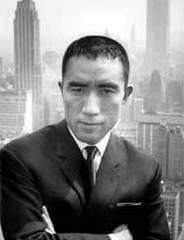
Yukio Mishima
Yukio Mishima was a Japanese author and playwright, a prominent figure in post-war Japanese literature. His works, characterized by a fusion of traditional Japanese aesthetics and modernist techniques, often explored themes of tradition, ritual, and the samurai code. more
You May Also Like
Source: The Innocence of Objects
“Сотри случайные черты - И ты увидишь: мир прекрасен.”
Source: Selected poems
Source: The Sorrows of Satan; or, The Strange Experience of One Geoffrey Tempest, Millionaire
Source: Undercover
Source: As meat loves salt
Source: Wicked: The Life and Times of the Wicked Witch of the West
“It's gonna take me a lot longer than a year without you to get over you.”
Source: Did I Mention I Need You?
Source: Tess of the D’Urbervilles
Source: Divine Union