Quotessence
Home / Quotes / Quote by Marie Corelli

Quote by Marie Corelli

Work

Author

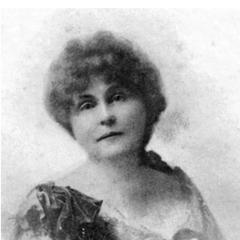
Marie Corelli
Marie Corelli

Marie Corelli, born on May 1, 1855, and died on April 21, 1924, was a renowned British novelist of the late 19th and early 20th centuries. Known for her romantic style and rich imagination, her works were highly popular during her time. more

You May Also Like

“Things are pretty, graceful, rich, elegant, handsome, but until they speak to the imagination, not yet beautiful. This is the reason why beauty is still escaping out of all analysis. It is not yet possessed, it cannot be handled. …It instantly deserts possession, and flies to an object in the horizon. If I could put my hand on the north star, would it be as beautiful? The sea is lovely, but when we bathe in it, the beauty forsakes all the near water. For the imagination and senses cannot be gratified at the same time.”

“Galinda didn't see the verdant world through the glass of the carriage; she saw her own reflection instead. She had the nearsightedness of youth. She reasoned that because she was beautiful she was significant, though what she signified, and to whom, was not clear yet...She was, after all, on her way to Shiz because she was smart. But there was more than one way to be smart.”

“How very lovable her face was to him. Yet there was nothing ethereal about it; all was real vitality, real warmth, real incarnation. And it was in her mouth that this culminated. Eyes almost as deep and speaking he had seen before, and cheeks perhaps as fair; brows as arched, a chin and throat almost as shapely; her mouth he had seen nothing to equal on the face of the earth. To a young man with the least fire in him that little upward lift in the middle of her red top lip was distracting, infatuating, maddening. He had never before seen a woman’s lips and teeth which forced upon his mind with such persistent iteration the old Elizabethan simile of roses filled with snow. Perfect, he, as a lover, might have called them off-hand. But no — they were not perfect. And it was the touch of the imperfect upon the would-be perfect that gave the sweetness, because it was that which gave the humanity.”

“Let us suppose we are confronted with a desperate thing – say Pimlico. If we think what is really best for Pimlico we shall find the thread of thought leads to the throne of the mystic and the arbitrary. It is not enough for a man to disapprove of Pimlico; in that case he will merely cut his throat or move to Chelsea. Nor, certainly, is it enough for a man to approve of Pimlico; for then it will remain Pimlico, which would be awful. The only way out of it seems to be for somebody to love Pimlico; to love it with a transcendental tie and without any earthly reason. If there arose a man who loved Pimlico, then Pimlico would rise into ivory towers and golden pinnacles… If men loved Pimlico as mothers love children, arbitrarily, because it is theirs, Pimlico in a year or two might be fairer than Florence. Some readers will say that this is mere fantasy. I answer that this is the actual history of mankind. This, as a fact, is how cities did grow great. Go back to the darkest roots of civilization and you will find them knotted round some sacred stone or encircling some sacred well. People first paid honour to a spot and afterwards gained glory for it. Men did not love Rome because she was great. She was great because they had loved her.”

“Beauty" and sexuality are both commonly misunderstood as some transcendent inevitable fact; falsely interlocking the two makes it seem doubly true that a woman must be "beautiful" to be sexual. That of course is not true at all. The definitions of both "beautiful" and "sexual" constantly change to serve the social order, and the connection between the two is a recent invention.”