Quotessence
Home / Quotes / Quote by Michelle Alexander

Quote by Michelle Alexander

“What is key to America’s understanding of class is the persistent belief — despite all evidence to the contrary — that anyone, with the proper discipline and drive, can move from a lower class to a higher class. We recognize that mobility may be difficult, but the key to our collective self-image is the assumption that mobility is always possible, so failure to move up reflects on one’s character. By extension, the failure of a race or ethnic group to move up reflects very poorly on the group as a whole.”

Quote by Michelle Alexander

Work

The New Jim Crow: Mass Incarceration in the Age of Colorblindness

This book critically examines the impact of mass incarceration on African Americans, arguing that it constitutes a new form of racial segregation and discrimination in the United States. more

Author
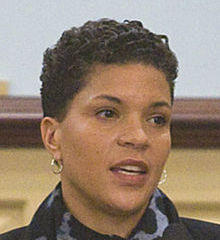
Michelle Alexander
Michelle Alexander

Michelle Alexander is a distinguished professor of law at the University of California, Berkeley. Born on October 7, 1967, she is recognized for her expertise in criminal justice and civil rights. Alexander has authored numerous articles and books on the subject of mass incarceration in the United States and its effects on African American communities. more

You May Also Like

“The ability to try to understand existence, the ability to try to recognize the wonder and responsibility of one's own existence, the ability to know even fractionally the almost annihilating beauty, ambiguity, darkness, and horror which swarm every instant of every consciousness, the ability to try to accept it, or the ability to try to defend one's self, or the ability to dare to try to assist others; all such as these, of which most human beings are cheated of their potentials, are, in most of those who even begin to discern or wish for them, the gifts or thefts of economic privilege, and are available to members of these leanest classes only by the rare and irrelevant miracle of born and surviving 'talent.”

“There is a difference between having your own movement and cutting yourself off politically from all other movements. This last form of feminist isolationism is attractive in its simplicity. It appears to offer an option which implies that you concentrate on your own struggle and wait for some absolute future when men and women have progressed towards equality. It is of course a profoundly liberal utopian notion. ‘Progress’ is seen as some kind of single linear advance towards a goal. There is no sense of a movement living and working in history, learning though a dialectical interaction of its own efforts in objective circumstances. It forgets that the consciousness of particular groups amongst the oppressed is only partial. While this consciousness must be realized and expressed in their own movement, if the attempt is not continually to extend and connect this partial consciousness to the experience of other oppressed groups, it cannot politicize itself in a revolutionary sense. It becomes locked within its own particularism.”