Quotessence
Home / Quotes / Quote by Isaac Asimov

Quote by Isaac Asimov

Work

The Universe: From Flat Earth to Quasar

Browse quotes and source details for this work. more

Author
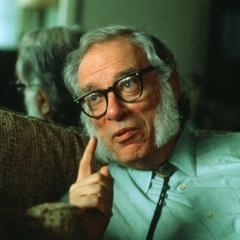
Isaac Asimov
Isaac Asimov

Isaac Asimov, born on January 2, 1920 in Poland and died on April 6, 1992 in the United States, was a renowned American science fiction author, science writer, and literary critic, known as the 'Father of Science Fiction'. His works covered a wide range of science fiction themes, including robots, space exploration, and time travel, and had a profound impact on science fiction literature and the popularization of science. more

You May Also Like

“If what God says is the truest thing about us, then it makes sense to follow him and accept our As-Is condition as the starting point. Thomas Merton said, 'The reason we never enter into the deepest reality of our relationship with God is that we so seldom acknowledge our utter nothingness before him.' If we confess the truth about ourselves, there's every reason to fear God will say, 'Yeah, that's right; and anotherthing...' and we're fairly sure there will be another thing. We are like people afraid to tell the doctor where we really hurt because we fear we may be sicker than we think. We are sicker than we think. We're dying and, crazily, running from the healer because we're ashamed, because we hate ourselves for all we are and all we're not.”

“As Thomas Merton correctly observes, “Sufism looks at man as a heart. . . . The heart is the faculty by which man knows God”, and so the supreme aim in Sufism is nothing else than “to develop a heart that knows God”. In the words of Rumi, “I have looked into my own heart; it is there that I have seen Him; He was nowhere else.” This leads Martin Lings to observe in his book What is Sufism?, “What indeed is Sufism, subjectively speaking, if not ‘heart-wakefulness’?”. Illustrating this, he quotes al-Hallâj: “I saw my Lord with the Eye of the Heart.” The Hesychast tradition of the Orthodox Church, for its part, speaks repeatedly of “prayer of the heart”, of the “discovery of the place of the heart”, of the “descent from the head to the heart”, and of the “union of the intellect (nous) with the heart”. (p. 5) – Kallistos Ware, Chapter 1: How Do We Enter the Heart?”

“On 10 December 1968, at a Red Cross centre near Bangkok, Thomas Merton gave a lecture affirming the place of the monastic as an outsider. ‘The monk is essentially someone who takes up a critical attitude toward the world and its structures,’ he remarked, ‘somebody who says, in one way or another, that the claims of the world are fraudulent.’ Afterward, he went back to his cottage to rest and to shower before a scheduled evening panel discussion. He emerged from his shower, walking with wet feet on a wet floor. It’s surmised that he reached for a fan, which was later shown to have faulty wiring, and suffered a fatal electric shock. Merton’s body was flown back to the US on an Air Force transport to Oakland, then sent on a commercial carrier to Louisville.”