Quotessence
Home / Quotes / Quote by Edward Bellamy

Quote by Edward Bellamy

“And in heaven's name, who are the public enemies?" exclaimed Dr. Leete. "Are they France, England Germany or hunger, cold and nakedness?”

Quote by Edward Bellamy

Author
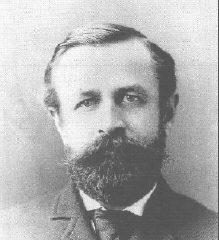
Edward Bellamy
Edward Bellamy

Edward Bellamy was an American author best known for his utopian novel 'Looking Backward', which had a profound impact on socialist thought in the late 19th century. more

You May Also Like

“Max had to think about these new developments. He hadn't liked getting hit by a rock--his stomach still ached from then rock Judith had thrown--but then again, when his team had used rocks on Alexander, it had caused him to surrender. Now the Bad Guys only had three soldiers left, which would make victory for Max's team more likely. So now it made perfect sense. He was wrong to ban rocks, or even animals. The key was to use all the weapons at one's disposal, but to just make sure you won when you used them.”

“I was taken to a villa to meet Sabri al-Banna, known as 'Abu Nidal' ('father of struggle'), who was at the time emerging as one of Yasser Arafat's main enemies. The meeting began inauspiciously when Abu Nidal asked me if I would like to be trained in one of his camps. No thanks, I explained. From this awkward beginning there was a further decline. I was then asked if I knew Said Hammami, the envoy of the PLO in London. I did in fact know him. He was a brave and decent man, who in a series of articles in the London Times had floated the first-ever trial balloon for a two-state solution in Israel/Palestine. 'Well tell him he is a traitor,' barked my host. 'And tell him we have only one way with those who betray us.' The rest of the interview passed as so many Middle Eastern interviews do: too many small cups of coffee served with too much fuss; too many unemployed heavies standing about with nothing to do and nobody to do it with; too much ugly furniture, too many too-bright electric lights; and much too much faux bonhomie. The only political fact I could winnow, from Abu Nidal's vainglorious claims to control X number of 'fighters' in Y number of countries, was that he admired the People's Republic of China for not recognizing the State of Israel. I forget how I got out of his office.”

“In Sarajevo in 1992, while being shown around the starved, bombarded city by the incomparable John Burns, I experienced four near misses in all, three of them in the course of one day. I certainly thought that the Bosnian cause was worth fighting for and worth defending, but I could not take myself seriously enough to imagine that my own demise would have forwarded the cause. (I also discovered that a famous jaunty Churchillism had its limits: the old war-lover wrote in one of his more youthful reminiscences that there is nothing so exhilarating as being shot at without result. In my case, the experience of a whirring, whizzing horror just missing my ear was indeed briefly exciting, but on reflection made me want above all to get to the airport. Catching the plane out with a whole skin is the best part by far.) Or suppose I had been hit by that mortar that burst with an awful shriek so near to me, and turned into a Catherine wheel of body-parts and (even worse) body-ingredients? Once again, I was moved above all not by the thought that my death would 'count,' but that it would not count in the least.”

“What people still do not like to admit is that there were two crimes in the form of one. Just as the destruction of Jewry was the necessary condition for the rise and expansion of Nazism, so the ethnic cleansing of Germans was a precondition for the Stalinization of Poland. I first noticed this point when reading an essay by the late Ernest Gellner, who at the end of the war had warned Eastern Europeans that collective punishment of Germans would put them under Stalin's tutelage indefinitely. They would always feel the guilty need for an ally against potential German revenge.”