Quotessence
Home / Quotes / Quote by Frederick Douglass

Quote by Frederick Douglass

“Could any thing be more true of our churches? They would be shocked at the proposition of fellowshipping a sheep-stealer; and at the same time they hug to their communion a man-stealer, and brand me with being an infidel, if I find fault with them for it. They attend with Pharisaical strictness to the outward forms of religion, and at the same time neglect the weightier matters of the law, judgment, mercy, and faith. They are always ready to sacrifice, but seldom to show mercy. They are they who are represented as professing to love God whom they have not seen, whilst they hate their brother whom they have seen. They love the heathen on the other side of the globe. They can pray for him, pay money to have the Bible put into his hand, and missionaries to instruct him; while they despise and totally neglect the heathen at their own doors. Such is, very briefly, my view of the religion of this land; and to avoid any misunderstanding, growing out of the use of general terms, I mean, by the religion of this land, that which is revealed in the words, deeds, and actions, of those bodies, north and south, calling themselves Christian churches, and yet in union with slaveholders.”

Quote by Frederick Douglass

Work

Narrative of the Life of Frederick Douglass

This seminal work provides a first-hand account of the hardships and triumphs of Frederick Douglass, a former slave who rose to prominence in the fight against slavery. The narrative covers his early years in bondage, his escape to freedom, and his subsequent journey to becoming a leading figure in the abolitionist movement. more

Author
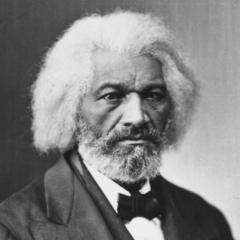
Frederick Douglass
Frederick Douglass

Frederick Douglass was a renowned orator and writer, born into a slave family in Maryland, USA. He gained his freedom in the mid-19th century through self-education and became one of the leaders of the abolitionist movement. Douglass made significant contributions to the cause of equality and justice in the United States through his incisive speeches and writings, which exposed the cruelty of slavery and inspired countless people to join the abolitionist movement. more

You May Also Like

“. . . we now live in a politically charged world of endless entitlement and victimization; anything upsetting, unfulfilling, or considered disenfranchising or oppressive is to be laid at the feet of society and the cultures that are produced—everything is society's fault. With its evolutionary understanding of life and reality, retaliation is not only expected it is culturally applauded—society must evolve—people must change. This cultural conditioning has become the necessary catalyst for murder and suicide. It not only sets the expectation but practically grants permission. This is the message today's young people are taught every day of their lives.”

“It’’s very hard to know who is going to commit an act of violence. But... prevention does not require prediction. It does require, however, that we increase overall access to brain health interventions. ... A... tiered system is already working in some schools. At the tier-one level, everyone should have access to brain health screenings and first aid, to conflict resolution programs, and to suicide prevention education. Peer intervention programs teach kids to seek help from trained adults for friends they’re worried about without fear of repercussion. A second tier of attention is trained on kids going through a hard time—a student grieving a lost parent, one who has suffered teasing or bullying, or those in known high-risk populations. For instance, gay, lesbian, bisexual, and transgender kids are at disproportionate risk for bullying, so special efforts might be made to connect those kids to resources. The third level of intervention comes into play when a child has emerged as a particular concern. Perhaps he or she has an ongoing emotional disorder, has talked about suicide, or—as Dylan did— has turned in a paper with violent or disturbing subject matter. The student is then referred to a team of specially trained teachers and other professionals who will interview him or her, look at the student's social media and other evidence, and speak to friends, parents, local law enforcement, counselors, and teachers. The real beauty of these measures is not that they catch potential school shooters, but how effectively they help schools to identify teens struggling with all different kinds of issues: bullying, eating disorders, cutting, undiagnosed learning disorders, addiction, abuse at home, and partner violence — just to name a few. In rare cases, a team may discover that the student has made a concrete plan to hurt himself or others, at which point law enforcement may become involved. In the overwhelming majority of these cases, though, simply getting a kid help is enough.”

“If gun control in the US proves impossible to get over the line, it may be time for architects to design new buildings with special lockdown alarms that divide buildings into six or seven sections, trapping potential shooters and denying them access to everyone in an entire school, workplace or place of worship.”

“Jessica's head is in Feather's lap. She is stroking her long blonde locks that look stunning as always. Her legs are bent at the knees, and she is still wearing her T-shirt and shorts from P.E. On the television Rory Calhoun is playing a malarial big game hunter who has set his rifle's target on a skinny castaway in a red shirt. Jessica has tried to introduce Feather to the joys of the Flashback Channel, but it doesn't seem to be sticking.”

“People die. Times end. Suffering and war circle into being like the rains of autumn and the winds of spring. You know this. We did not, and do not, bring evil into these realms. It is already here. How many cities had you burned before you took this penitent path? How much blood have you seen our enemies spill? How much suffering fills life without the True Gods ever lifting a finger?”