Quotessence
Home / Quotes / Quote by Milan Kundera

Quote by Milan Kundera

Work

The Unbearable Lightness of Being

Browse quotes and source details for this work. more

Author
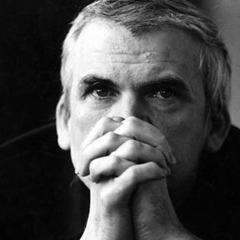
Milan Kundera
Milan Kundera

Milan Kundera is a renowned Czech-French writer known for his profound psychological insights and unique narrative techniques. His works often explore themes of personal freedom, love, morality, and existentialism, with notable titles including 'The Unbearable Lightness of Being' and 'The Joke'. more

You May Also Like

“So what came first, do you reckon, the horrible thoughts forcing you to carry out rituals like a junkie, or the need to make people laugh? Or maybe they’re two sides of the same coin. The vivid imagination causing thoughts which make you want to cry is the same imagination that can find humour in situations other people would call ‘mundane’…” “It’s occurred to me, yes.” “Oh, it’s more than occurred to you, Nicky boy. You’re an intelligent man who has an affliction which affects your mind, so you’ve definitely thought about it. A lot, I bet. I’d like to tell you something Nicky, but I want to make sure I’ve got your full attention. Do I?” “Yes,” I replied in spite of myself. He leaned even closer, as if we were either co-conspirators in some scheme or lovers about to kiss. “We’re all victims. All of us. Victims of our own minds...”

“All I ever learned was that, having reached that limit, another horizon would open up, and that I had to keep on driving myself, escaping toward a horizon line that was forever receding, until today, here, as I walked beside the frozen river, the entire horizon turned back and came at me from all sides and its lines passed through me, creating a central point that did not impinge on me but rather came back to my hands and feet like a boomerang.”

“I suppose, if I ever accepted who I really was, I would have killed myself long ago. In truth, there are only two types of people that commit suicide. The first are those that have lost all control of their mind, their reality, and a square footing in this world. They see nothingness as an adequate respite from the sensory offenses of life. The second ones are absolute madmen. They leave thinking the afterlife is better than here.”