Quotessence
Home / Quotes / Quote by Sigmund Freud

Quote by Sigmund Freud

“El primer humano que insultó a su enemigo en vez de tirarle una piedra fue el fundador de la civilización”

Quote by Sigmund Freud

Author
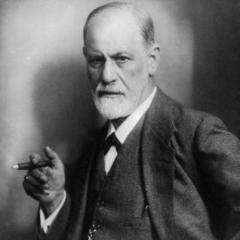
Sigmund Freud
Sigmund Freud

Sigmund Freud, born on May 6, 1856, in Moravia, and died on September 23, 1939, in London, was an Austrian neurologist and the founder of psychoanalysis. Known as the father of modern psychology, Freud made significant contributions to the understanding of human psychology, introducing concepts such as the unconscious mind, dream analysis, and sexual theory. more

You May Also Like

“Não é sob os raios causticantes do sol mas na fria luz refletida da lua, quando a escuridão da inconsciência atinge sua plenitude, que o processo criativo se completa: a noite, e não o dia, é que é o momento da procriação. Esta requer escuridão e quietude, segredo, mudez e ocultamento. Em conseqüência, a lua é senhora da vida e do crescimento em oposição ao sol letal e devorador. O tempo úmido da noite é o tempo do sono, mas também da cura e de recuperação . Por esta razão, o deus da lua, Sin, é um médico; uma inscrição cuneiforme representando sua planta curativa diz que “depois que o sol se põe e com a cabeça velada, ela (a planta) deve ser circundada com um anel mágico de farinha e cortada antes que o sol nasça”. Aqui vemos, associado com o círculo mágico e com a farinha, o símbolo misterioso de “velar , que pertence à lua e ao segredo da noite. Cura e terapeuta, planta curativa e crescimento recuperador se encontram nessa configuração. É o poder regenerador do inconsciente que na escuridão noturna sou sob a luz da lua executa seu trabalho, um mysterium dentro de um mysterium, trabalhando a partir de si mesmo e da natureza, sem qualquer ajuda do ego cerebral. É por isso que as pílulas e as ervas curativas são associadas à lua e seus segredos guardados por mulheres, ou melhor, pela natureza feminina, que está ligada à lua. Aqui o simbolismo do crescimento vegetativo deve ser interpretado no sentido amplo que concede todo símbolo como síntese de uma realidade tanto interior como exterior. Ao reino noturno da lua curativa pertence o poder regenerador do sono que cura o corpo e suas feridas, a escuridão onde tem lugar a recuperação, e também aqueles acontecimentos da alma que na obscuridade, por processos que somente o coração pode saber, permitem ao homem “superar“ suas crises insolúveis. Não é, como se pensou, porque a lua muitas vezes parece verde no leste, que se supôs ser o verde a cor da lua; é por causa da inerente afinidade da lua com a vegetação da qual se diz: “Quando a palavra de Sin desce sobre a terra, o verde aparece.“ Esse verde de Osíris, de Chidher, do broto de shiva e da pedra verde alquímica, não é somente a cor do desenvolvimento físico mas também do desenvolvimento do espírito e da alma. A lua como regente da consciência matriarcal, está ligada a um conhecimento específico e a uma forma particular de compreensão. Isso é a consciência que nasceu, o espírito que veio à luz como fruto da noite.”

“Большинство людей, обращающихся к психиатру, страдают либо неврозами, либо характеропатией. Если сказать проще, то оба эти состояния выражают нарушение ответственности в отношениях с миром и его проблемами; эти нарушения у них носят противоположный характер: невротик берет на себя слишком много ответственности, характеропат — слишком мало. В случае конфликта с миром невротик автоматически считает виноватым себя, характеропат же обвиняет весь мир.”

“When Jean Piaget lectured in the United States, he was frequently asked whether the rate at which children attained his cognitive stages could be accelerated—in other words, whether you could train your child to be "ahead" of other children. Piaget was bewildered by the question. In his view of development, being "ahead" or "behind" anyone else was meaningless. But he got the question often enough that he came to associate it with a particular worldview: he called it "the American Question.”

“As Uncle Hegel used to enjoy pointing out, the trouble with perspectives is that they are, by definition, PARTIAL points of view; the Real problems are appreciated only when, in the course of the development of the World Spirit, the limits of perspective come to be transcended. Or, to put it less technically, it helps to be able to see the whole elephant.”

“The interpenetration of chance and determination bears on the problem of how there can be a scientific approach to society when individual human behavior and consciousness seem unpredictable. Those who despair to point out that people are not machines, that there are subjective processes in the making of decisions, that it is not 'classes' but individuals who make choices. Terms such as "the human factor" or "subjective factors" with their implication of chance and unpredictability are invoked as the negation of regularity and lawfulness. And indeed it is true that individual behavior and consciousness are the consequences of intersection of a large number of weakly determining factors. But it does not follow that where there is choice, subjectivity, and individuality there cannon also be predictability. The error to take the individual as causally prior to the whole and not to appreciate that the social has causal properties within which individual consciousness and action are formed. While the consciousness of an individual is not determined by his/her class position but is influenced by idiosyncratic factors that appear as random, those random factors operate within a domain and with probabilities that are constrained and directed by social forces.”

“For, dear me, why abandon a belief Merely because it ceases to be true. Cling to it long enough, and not a doubt It will turn true again, for so it goes. Most of the change we think we see in life Is due to truths being in and out of favor. As I sit here, and oftentimes, I wish I could be monarch of a desert land I could devote and dedicate forever To the truths we keep coming back and back to. So desert it would have to be, so walled By mountain ranges half in summer snow, No one would covet it or think it worth The pains of conquering to force change on. Scattered oases where men dwelt, but mostly Sand dunes held loosely in tamarisk Blown over and over themselves in idleness.”