Quotessence
Home / Quotes / Quote by Robert Frost

Quote by Robert Frost

“For, dear me, why abandon a belief Merely because it ceases to be true. Cling to it long enough, and not a doubt It will turn true again, for so it goes. Most of the change we think we see in life Is due to truths being in and out of favor. As I sit here, and oftentimes, I wish I could be monarch of a desert land I could devote and dedicate forever To the truths we keep coming back and back to. So desert it would have to be, so walled By mountain ranges half in summer snow, No one would covet it or think it worth The pains of conquering to force change on. Scattered oases where men dwelt, but mostly Sand dunes held loosely in tamarisk Blown over and over themselves in idleness.”

Quote by Robert Frost

Work

North of Boston

North of Boston is a compilation of short stories that delve into the complexities of life in rural New England. The stories examine the interactions between individuals and their environment, as well as the broader human condition. more

Author

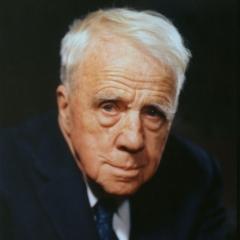
Robert Frost
Robert Frost

Robert Frost, born on March 26, 1874, and died on January 29, 1963, was one of the most renowned poets of the 20th century in the United States. He is known for his profound philosophy and unique poetic style, which often explores themes such as nature, life, and morality. more

You May Also Like

“Spitzfindgikeiten des bloßen Begriffs waren die Gestehungkosten für die Entdeckung der Dialektik, Aristotelisch-Hegelsche Teleologie ging der Tendenz, Augustinisches Sabbatreich dem Reich der Freiheit vorauf. Und nicht zuletzt, ganz zuletzt geht die Aristotelische Deckung des δυνάμει ὄν, des In-Möglichkeit-Seins mit der Materie als tragender Materie jeder utopischen Substraterweiterung der Materie vorher; ob auch der Aristotelische Materie-Begriff in großer Philosophie rückwärts wie großen Teils auf vorwärts oft vereinsamt blieb.”

“Perhaps I can best explain by presenting these three somewhat arcane principles of depth psychology and then go on to unpack them and give you examples. I. It's not about what it's about. II. What you see is a compensation for what you don't see. III. All is metaphor.”

“It is no secret we live in troubled times. People in most areas—and most geographic and spiritual locations—have also thought themselves living in troubled times, and for sure, most individuals come to troubles sooner or later in the course of their own lifetime.”

“Perhaps I can best explain by presenting these three somewhat arcane principles of depth psychology and then go on to unpack them and give you examples. I. It's not about what it's about. II. What you see if a compensation for what you don't see. III. All is metaphor.”

“It was after a Frontline television documentary screened in the US in 1995 that the Freyds' public profile as aggrieved parents provoked another rupture within the Freyd family, when William Freyd made public his own discomfort. 'Peter Freyd is my brother, Pamela Freyd is both my stepsister and sister-in-law,' he explained. Peter and Pamela had grown up together as step-siblings. 'There is no doubt in my mind that there was severe abuse in the home of Peter and Pam, while they were raising their daughters,' he wrote. He challenged Peter Freyd's claims that he had been misunderstood, that he merely had a 'ribald' sense of humour. 'Those of us who had to endure it, remember it as abusive at best and viciously sadistic at worst.' He added that, in his view, 'The False memory Syndrome Foundation is designed to deny a reality that Peter and Pam have spent most of their lives trying to escape.' He felt that there is no such thing as a false memory syndrome.' Criticising the media for its uncritical embrace of the Freyds' campaign, he cautioned: That the False Memory Syndrome Foundation has been able to excite so much media attention has been a great surprise to those of us who would like to admire and respect the objectivity and motive of people in the media. Neither Peter's mother nor his daughters, nor I have wanted anything to do with Peter and Pam for periods of time ranging up to two decades. We do not understand why you would 'buy' into such an obviously flawed story. But buy it you did, based on the severely biased presentation of the memory issue that Peter and Pam created to deny their own difficult reality. p14-14 Stolen Voices: An Exposure of the Campaign to Discredit Childhood Testimony”