Quotessence
Home / Quotes / Quote by Richard Francis Burton

Quote by Richard Francis Burton

“Nor shall they silent in my song remain, they who in regions there where Dawns arise, by Acts of Arms such glories toil'd to gain, where thine unvanquisht flag for ever flies, Pacheco, brave of braves; th' Almeidas twain, whom Tagus mourns with ever-weeping eyes ; dread Albuquerque, Castro stark and brave, with more, the victors of the very grave.”

Quote by Richard Francis Burton

Work

Os Lusiadas V1: The Lusiads

Browse quotes and source details for this work. more

Author
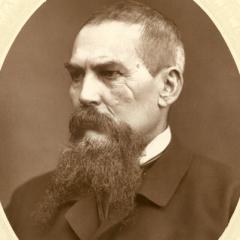
Richard Francis Burton

Richard Francis Burton (1821-1890) was a British explorer, translator, writer, and diplomat renowned for his expeditions in Africa, Asia, and the Middle East. Fluent in multiple languages including Arabic, Swahili, and Hindi, he is best known for his complete English translation of One Thousand and One Nights. His travels and writings significantly influenced Western understanding of Eastern cultures. more

You May Also Like

“I don't think anyone sets out to be a hero or a role model. I don't think that's how you become those things. But when you set out to follow your dreams—when you set goals and go after them with hard work and persistence and faith and integrity—then you start creating a path that others will want to follow because of the light that you shine. If you set out to be the best version of yourself, there's no way you can go wrong.”

“The new non-Dionysiac spirit is most clearly apparent in the endings of the new dramas. At the end of the old tragedies there was a sense of metaphysical conciliation without which it is impossible to imagine our taking delight in tragedy; perhaps the conciliatory tones from another world echo most purely in Oedipus at Colonus. Now, once tragedy had lost the genius of music, tragedy in the strictest sense was dead: for where was that metaphysical consolation now to be found? Hence an earthly resolution for tragic dissonance was sought; the hero, having been adequately tormented by fate, won his well-earned reward in a stately marriage and tokens of divine honour. The hero had become a gladiator, granted freedom once he had been satisfactorily flayed and scarred. Metaphysical consolation had been ousted by the deus ex machina.”

“And isn’t that the problem with heroes? Without an adversary to fight and hapless people to protect, heroes feel irrelevant, pointless even. Heroes are defined by their opponents—the more formidable the opponents, the more potent are the heroes. So, rather than defining the hero by his own merit, heroism is relative. If a man killed a small poisonous snake, he would be applauded for a minute. If he slew a lion, he would be spoken of for years. If he slew a dragon, generations would talk about him. The other thing about being a hero is that every spectator has a different sense of what is right. A hero in the eyes of one could be a murderer in the eyes of another. By that logic, one man’s hero may not be another man’s hero. A mongoose is a hero when it is fighting against a cobra, and when there is no cobra, it is just a rodent—a pest. A snake is poisonous and can kill. A lion is dangerous and can tear you apart. And a dragon is fearsome and can burn you to ashes. And a hero who kills them becomes part of the folklore. But has someone asked the snake’s mate, the lion’s cub, or the dragon’s worshippers what they think of this hero? More importantly, has someone asked a person living with a hero constantly? Imagine being reverential every time you see or talk to them forever. It is impossible! Once the awe fades, you see a hero as an average person. Peace and normalcy relegate a hero to the crowds of commoners going about their daily chores”