Quotessence
Home / Quotes / Quote by Gotthold Ephraim Lessing

Quote by Gotthold Ephraim Lessing

Work

Philotas

Browse quotes and source details for this work. more

Author

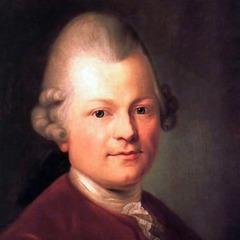
Gotthold Ephraim Lessing

Gotthold Ephraim Lessing was a prominent German writer and philosopher, known for his contributions to the Enlightenment. He is celebrated for his plays, poetry, and literary criticism, which often explored moral and philosophical themes. more

You May Also Like

“The view that the truth is one and undivided, and the same for all men everywhere at all times, whether one finds it in the pronouncements of sacred books, traditional wisdom, the authority of churches, democratic majorities, observation and experiment conducted by qualified experts, or the convictions of simple folks uncorrupted by civilisation---this view, in one form or another, is central to western thought, which stems from Plato and his disciples.”

“A line that reads, 'Died gallantly' would tell a truer story, often, if it read, 'Died screaming'; and instead of the total number of troops who 'sacrificed' their lives, we might simply chisel onto a block of marble the number of limbs left on the battlefield or in hospitals, the number of body parts unaccounted for, missing in action. Such a memorial would be unthinkable, of course, and I must confess that even I would find it tasteless. But if you want the truth about war, you have to start and end with the screaming.”

“When you deeply love someone from that space that is beyond attachment to certain projections or desires, when you love someone just deeply, totally, completely, without any games that the mind or emotions play, then that love remains eternal in the heavens forever, and that is what pulls you back to remembering that love.”

“In 2008, the national Coping with Cancer project published a study showing that terminally ill cancer patients who were put on a mechanical ventilator, given electrical defibrillation or chest compressions, or admitted, near death, to intensive care had a substantially worse quality of life in their last week than those who received no such interventions. And, six months after their death, their caregivers were three times as likely to suffer major depression. Spending one’s final days in an I.C.U. because of terminal illness is for most people a kind of failure. You lie on a ventilator, your every organ shutting down, your mind teetering on delirium and permanently beyond realizing that you will never leave this borrowed, fluorescent place. The end comes with no chance for you to have said goodbye or “It’s O.K.” or “I’m sorry” or “I love you.” People have concerns besides simply prolonging their lives. Surveys of patients with terminal illness find that their top priorities include, in addition to avoiding suffering, being with family, having the touch of others, being mentally aware, and not becoming a burden to others. Our system of technological medical care has utterly failed to meet these needs, and the cost of this failure is measured in far more than dollars. The hard question we face, then, is not how we can afford this system’s expense. It is how we can build a health-care system that will actually help dying patients achieve what’s most important to them at the end of their lives.”