Quotessence
Home / Quotes / Quote by Thomas Merton

Quote by Thomas Merton

“It is this kind of consciousness, exacerbated to an extreme, which has made inevitable the so called "death of God." Cartesian thought began with an attempt to reach God as object by starting from the thinking self. But when God becomes object, he sooner or later "dies," because God as object is ultimately unthinkable. God as object is not only a mere abstract concept, but one which contains so many internal contradictions that it becomes entirely nonnegotiable except when it is hardened into an idol that is maintained in existence by a sheer act of will. For a long time man continued to be capable of this willfulness: but now the effort has become exhausting and many Christians have realised it to be futile. Relaxing the effort, they have let go the "God-object" which their fathers and grandfathers still hoped to manipulate for their own ends. Their weariness has accounted for the element of resentment which made this a conscious "murder" of the deity. Liberated from the strain of willfully maintaining an object-God in existence, the Cartesian consciousness remains none the less imprisoned in itself. Hence the need to break out of itself and to meet "the other" in "encounter," "openness," "fellowship," "communion".”

Quote by Thomas Merton

Work

Zen and the Birds of Appetite

This book delves into the principles of Zen Buddhism, drawing comparisons between the spiritual practices and the habits of birds, particularly those with appetitive behaviors. It aims to illustrate the interconnectedness of life and the mindfulness that can be found in observing the natural world. more

Author
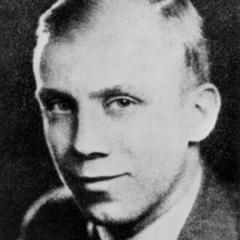
Thomas Merton
Thomas Merton

Thomas Merton (January 31, 1915 - December 10, 1968) was an American writer, poet, social critic, and mystic. His works covered a wide range of topics including philosophy, religion, and social justice, and were highly appreciated by readers. more

You May Also Like

“As a matter of face, Zen is at present most fashionable in America among those who are least concerned with moral discipline. Zen has, indeed, become for us a symbol of moral revolt. It is true, the Zen-man's contempt for conventional and formalistic social custom is a healthy phenomenon, but it is healthy only because it presupposes a spiritual liberty based on freedom from passion, egotism and self-delusion. A pseudo-Zen attitude which seeks to justify a complete moral collapse with a few rationalizations based on the Zen Masters is only another form of bourgeois self-deception. It is not an expression of healthy revolt, but only another aspect of the same lifeless and inert conventionalism against which it appears to be protesting.”

“Who are you without your labels and attachments to the issues you are passionate about? Remove the emotions, remove the beliefs and associations, and simply focus on the rational and practical applications that promote peaceful progression.”

“The more I can accept the fact that change is moving all the time, and that the change I am experiencing right now is just the change of this moment and that this moment will change into the next and the next, the less need I will have to clutch in fear.”

“The story of the Fall tells us in mythical language that "original sin" is not simply a stigma arbitrarily making good pleasures seem guilty, but a basic inauthenticity, a kind of predisposition to bad faith in our understanding of ourselves and of the world. It implies a determined willfulness in trying to make things be other than they are in order that we may be able to make them subserve, at any moment, to our individual desire for pleasure or for power. But since things do not obey our arbitrary impulsions, and since we cannot make the world correspond to and confirm the image of it dictated by our needs and illusions, our willfulness is inseparable from error and from suffering. Hence, Buddhism says, deluded life itself is in a state of Dukkha, and every movement of desire tends to bear ultimate fruit in pain rather than lasting joy, in hate rather than love, in destruction rather than creation. (Let us note in passing that when technological skill seems in fact to give man almost absolute power in manipulating the world, this fact is no way reverses his original condition of brokenness and error but only makes it all the more obvious. We who live in the age of the H-bomb and the extermination camp have reason to reflect on this, though such reflection is a bit unpopular.)”

“The true Christian was intended by Christ to prove all things by the Word of God: all churches, all ministers, all teaching, all preaching, all doctrines, all sermons, all writings, all opinions, all practices. These are his marching orders. Prove all by the Word of God; measure all by the measure of the Bible; compare all with the standard of the Bible; weigh all in the balances of the Bible; examine all by the light of the Bible; test all in the crucible of the Bible. That which cannot abide the fire of the Bible, reject, refuse, repudiate, and cast away. This is the flag which he nailed to the mast. May it never be lowered!”

“The standard-brand religions [...] are — as now practiced — like exhausted mines: very hard to dig. With some exceptions not too easily found, their ideas about man and the world, their imagery, their rites, and their notions of the good life don't seem to fit in with the universe as we now know it, or with a human world that is changing so rapidly that much of what one learns in school is already obsolete on graduation day.”