Quotessence
Home / Quotes / Quote by Toni Morrison

Quote by Toni Morrison

“And I believe our sorrow was the more intense because nobody else seemed to share it. They were disgusted, amused, shocked, outraged, or even excited by the story. But we listened for the one who would say, "Poor little girl," or "Poor baby," but there was only head-wagging where those words should have been. We looked for eyes creased with concern, but saw only veils.”

Quote by Toni Morrison

Work

The Bluest Eye

Set in the 1930s in the American Midwest, this novel delves into the complex psychological and social issues faced by a young African American girl named Pecola. The story follows her journey as she grapples with her own perception of beauty and her place in a society that is deeply divided by race and class. more

Author

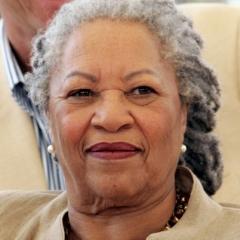
Toni Morrison
Toni Morrison

Toni Morrison is an American novelist known for her profound portrayal of the history and culture of African Americans. Her works often explore issues of race, gender, and identity, with her most famous novels being 'The Bluest Eye' and 'Sula'. more

You May Also Like

“The simulation of Western values is universal once one gets beyond the boundaries of our culture. Is it not true, though, that in our heart of hearts we ourselves, who are neither Alakaluf nor Aboriginal, neither Dogon nor Arab, fail signally to take our own values seriously? Do we not embrace them with the same affectation and inner unconcern - and are we not ourselves equally unimpressed by all our shows of force, all our technological and ideological pretensions? Nevertheless, it will be a long time before the utopian abstraction of our universal vision of differences is demolished in our own eyes, whereas all other cultures have already given their own response - namely, universal indifference.”

“With indifference people are continuously breeding a society full of disparity – they are constantly aiding the creation of more inequality. We are constantly making way for a world where some parents give their kids x-box to soothe them, for their birthday, and many more parents are forced to use leftover cardboard boxes as cradle for their babies because they don't even have a roof over their head. This is our so called civilization - this is our so called modern humanity - shame on us - shame on us as a species - shame on us as civilized beings - shame on us as thinking and breathing individuals of conscience. No more - no more - we must break this disparity - and we must do it right now - and we are not going to do it by fighting over whose ideology is the best - we are going to do it only by taking actual responsibility of our society - by taking actual responsibility of the world - we are going to do it by acting as a living cure for those disparities, by using our own resources as means to erase those gaps however we can. Only with action born from our heart can we end disparity, not with talks of argument and inaction of complacency.”

“His stomach turned inside out, like a glove, and he vomited. It wasn't disagreeable at all. Almost like a liberation, in fact. A kind of suicide, in a way. These particles of matter that showered from his mouth, after he had thought them consumed and digested, did not disgust him. No, he was completely indifferent to them; and to everything else, for that matter. It was only when he vomited that he could be indifferent even to life itself.”

“From the realization of oneness rises the desire for justice - from the realization of oneness rises the desire for equality - from the realization of oneness rises the desire for unification. And do not confuse the realization of oneness to be a comforting experience, for the moment you become one with the rest of humanity, is the moment the sleeplessness and restlessness begin. Because once your mind is one with humanity it can't rest in peace till it sees the sufferings, disparities and discriminations alleviated. And remember, better sleepless for justice than soulless in indifference - better sleepless for equality than soulless in apathy - better sleepless for harmony than soulless in complacency.”

“Synthetic Civilization (The Sonnet) The watchwords of civilization, Are reason and inclusion. Yet we live by the golden rules, Of rigidity and exclusion. We dress up in fancy clothes, To feel powerful and important. Beneath the lies of civilization, Beats a heart most impotent. We boast proudly about equality, Unaware of our biases most inane. We admire the rights of our own, Rights of others are business of the UN. Enough of this make belief ascension. It’s time to humanize our synthetic civilization.”

“Once she had thought belief depended on inclination. But she fought against this new realization as hard as she could, trying to shut out the future as before she had shut out the past; yet still it gained ground. It mingled with her daily life, with the war, with the winter, until it scarcely seemed a separate thing at all, but merely a state of mind produced by living alone, living in England and all the rest of it. She deeply hoped it was. There were times when it seemed a trivial and shallow depression. And there were times when the fear of it touched her as cold as wet steel: when she could see herself hardly aware that she was unhappy, because her feelings had so nearly atrophied, and receiving no compensations in return.”