Quotessence
Home / Quotes / Quote by Edith Wharton

Quote by Edith Wharton

Work

Hudson River Bracketed

Browse quotes and source details for this work. more

Author
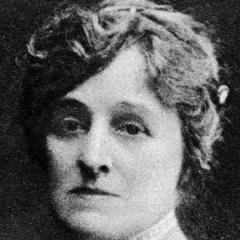
Edith Wharton
Edith Wharton

American novelist known for her delicate psychological portrayals and profound social insights. Edith Wharton came from a wealthy New York family and her works mainly reflect the American society at the end of the 19th century and the beginning of the 20th century. Her representative works include 'The Age of Innocence' and 'The House of Mirth' among others. more

You May Also Like

“The lessons of history are manifold. Nothing happens in isolation. Everything that happens has consequences. We are all part of a larger stream of events, past, present, and future. We are all the beneficiaries of those who went before us--who built the cathedrals, who braved the unknown, who gave of their time and service, and who kept faith in the possibilities of the mind and the human spirit. An astute observer of old wrote that history is philosophy taught with examples. Harry Truman liked to say that the only new thing in the world is the history you don't know. From history we learn that sooner is not necessarily better than later ... that what we don't know can often hurt us and badly ... and that there is no such thing as a self-made man or woman. A sense of history is an antidote to self-pity and self-importance, of which there is too much in our time. To a large degree, history is a lesson in proportions.”

“Archaeology is a deeply conservative discipline and I have found that archaeologists, no matter where they are working, have a horror of questioning anything their predecessors and peers have already announced to be true. They run a very real risk of jeopardizing their careers if they do. In consequence they focus--perhaps to a large extent subconsciously--on evidence and arguments that don't upset the applecart. There might be room for some tinkering around the edges, some refinement of orthodox ideas, but God forbid that anything should be discovered that might seriously undermine the established paradigm.”