Quotessence
Home / Quotes / Quote by Siri Hustvedt

Quote by Siri Hustvedt

“Va ser llavors que em vaig fixar en un blau que tenia just per sota del genoll. Ja l’havia vist abans, però en aquell moment el seu to porpra, que en una de les vores virava cap al verd grogós, va atreure els meus ulls, com si aquesta petita ferida fos realment el tema del quadre. M’hi vaig atansar, vaig posar un dit a la tela i vaig resseguir el contorn del blau. Aquest gest em va excitar. Em vaig girar per mirar l’Erica. Era un dia càlid de setembre, i ella tenia els braços descoberts. Em vaig inclinar i li vaig besar les pigues de les espatlles, i en acabat li vaig enretirar els cabells que li cobrien el coll i vaig besar la pell suau de sota. Em vaig agenollar davant seu, li vaig apujar la roba de la faldilla, li vaig passar els dits per les cuixes, i llavors vaig fer servir la llengua.”

Quote by Siri Hustvedt

Work

What I Loved

Browse quotes and source details for this work. more

Author
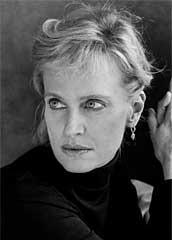
Siri Hustvedt
Siri Hustvedt

Siri Hustvedt is an American novelist born on February 19, 1955. Her works are known for their deep psychological insights and exploration of female experiences. Hustvedt's novels often blend philosophy, literature, and psychology, showcasing complex characters and inner worlds. more

You May Also Like

“...I listened to you say that we are all - Jana'ata and Runa and H'uman - children of a God so high that our ranks and our differences are as nothing in his far sight." ... " I thought then that this was merely a song sung by a foreigner to a foolish girl who believed nonsense. ... I was willing to hear this song, because I had once yearned for a world in which lives would be governed not by lineage and lust and moribund law, but by love and loyalty. In this one valley, such lives are possible, she said, "If it is a mistake to hope for such a world, then it is a magnificent mistake.”

“Some arts move in time, like music; others are presented in space, like painting. In both cases the organizing principle is recurrence, which is called rhythm when it is temporal and pattern when it is spatial. Thus we speak of the rhythm of music and the pattern of painting; but later, to show off our sophistication, we may begin to speak of the rhythm of painting and the pattern of music. In other words, all arts may be conceived both temporally and spatially. The score of a musical composition may be studied all at once; a picture may be seen as the track of an intricate dance of the eye. Literature seems to be intermediate between music and painting: its words form rhythms which approach a musical sequence of sounds at one of its boundaries and form patterns which approach the hieroglyphic or pictorial image atthe other. The attempts to get as near to these boundaries as possible form the main body of what is called experimental writing. We may call the rhythm of literature the narrative, and the pattern, the simultaneous mental grasp of the verbal structure, the meaning or significance. We hear or listen to a narrative, but when we grasp a writer’s total pattern we “see” what he means.”

“Picasso was right to start painting the dreary and dejected. The blues. He looked out the window at his own misery. I could respect that. But these painters of fruit thought only of their own mortality, as though the beauty of their work would somehow soothe their fears of death. There they all were, hanging feckless and candid and meaningless, paintings of things, objects, the paintings themselves just things, objects, withering toward their own inevitable demise.”