“Anna was, Livia is, Plurabelle's to be. Northmen's thing made southfolk's place but howmulty plurators made eachone in per-son? Latin me that, my trinity scholard, out of eure sanscreed into oure eryan! Hircus Civis Eblanensis! He had buckgoat paps on him, soft ones for orphans. Ho, Lord! Twins of his bosom. Lord save us! And ho! Hey? What all men. Hot? His tittering daugh-ters of. Whawk? Can't hear with the waters of. The chittering waters of. Flitter-ing bats, fieldmice bawk talk. Ho! Are you not gone ahome? What Thom Malone? Can't hear with bawk of bats, all thim liffey-ing waters of. Ho, talk save us! My foos won't moos. I feel as old as yonder elm. A tale told of Shaun or Shem? All Livia's daughter- sons. Dark hawks hear us. Night! Night! My ho head halls. I feel as heavy as yonder stone. Tell me of John or Shaun? Who wereShem and Shaun the living sons or daughters of? Night now! Tell me, tell me, tell me, elm! Night night! Telmetale of stem or stone. Beside the rivering waters of, hitherandthithering waters of. Night!”
Quote by James Joyce
Work
Finnegans Wake is a seminal work of modernist literature, written by James Joyce. The novel is renowned for its intricate and abstract narrative, which incorporates a wide range of literary techniques and references. It is considered one of the most challenging works in the English language, with its dense prose and unconventional grammar often leaving readers puzzled. The story is set in Dublin and follows the life of the character HCE, though the narrative is fragmented and non-linear, making it difficult to discern a clear plot. The novel is often praised for its linguistic inventiveness and its exploration of themes such as time, memory, and the human condition. more
Author
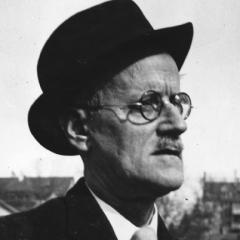
James Joyce, born on February 2, 1882, and died on January 13, 1941, was an Irish novelist and one of the greatest writers of the 20th century. Known for his unique narrative techniques and profound psychological insights, Joyce is celebrated for his contributions to modernist literature. His most famous work is 'Ulysses', which is considered one of the greatest literary works of the 20th century. Other notable works include 'Dubliners' and 'Finnegans Wake'. more
You May Also Like
“Snow came back, but she didn't come back right.”