Quotessence
Home / Quotes / Quote by Oscar Wilde

Quote by Oscar Wilde

Work

The Collected Complete Works Of Oscar Wilde

Browse quotes and source details for this work. more

Author
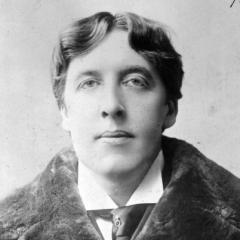
Oscar Wilde
Oscar Wilde

Oscar Wilde, born on October 16, 1854, in Ireland, and died on November 30, 1900, was a renowned Irish writer, playwright, and poet. His works are known for their wit, satire, and unique style, with notable works including 'The Picture of Dorian Gray' and 'Lady Windermere's Fan'. more

You May Also Like

“The books that lined the walls from floor to ceiling sat there quietly, never calling out for attention or advertising themselves with gaudy covers. But even if they appeared to be nothing more than unadorned paper boxes from the outside, they exuded a beauty equal to anything created by a sculptor or potter. Even though the meaning of the words printed on their pages was so profound it could never have been contained by those boxes, the books never let on to their depths. They waited patiently until someone picked them up and opened their covers.”

“at this centre are the great primitive emotions common to all men. The religious group, the deep awe and reverence men feel when contemplating the great mystery of the Universe and their own littleness in the face of its vastness - the desire to correspond and develop relationship with the something outside themselves that is felt to be behind and through all things. Then there are those connected with the joy of life, the throbbing of the great life spirit, the gladness of being, the desire of the sexes; and also those connected with the sadness and mystery of death and decay,”

“Artists choose their purpose as much as they are chosen by that purpose. In a certain way, art is a revolt against the world in that it encompasses what is fleeting and unfinished: art does not, therefore, take on anything more than the purpose of giving another shape to a reality that it is, nevertheless, constrained to conserve, because reality is the source of art’s emotion. In this respect, we are all realists and no one is a realist. Art is neither total rejection nor total acceptance of what is. It is both rejection and acceptance, at one and the same time, and that is why it can be continually and perpetually torn apart. Artists always find themselves dealing with this ambiguity, incapable of rejecting what is real, yet still devoted to challenging the ever-unfinished aspects of reality.”

“But if art is not a dangerous adventure, then what is it, and what is its justification? No, free artists cannot enjoy comfort any more than free people can. Free artists are those who, with great difficulty, create order themselves. The more chaos they must bring order to, the stricter their rules will be, and the more they will have affirmed their freedom. Gide said something that I have always agreed with, even though it might be misunderstood: “Art lives from constraint and dies from freedom.” That is true, but we must not draw the conclusion that art should be controlled. Art only lives through the constraints it places upon itself: it dies from any others. On the other hand, if art does not control itself, it descends into madness and is enslaved by its own illusions. The most liberated form of art, and the most rebellious, will thus be the most enduring; it will glorify the greatest effort. If a society and its artists do not accept this long, liberating task, if they yield to the comforts of entertainment or conformity, to the diversions of art for art’s sake or the moralizing of realistic art, its artists will remain entrenched in nihilism and sterility. Saying this means that a rebirth in art today depends on our courage and our desire to see clearly.”

“What would art speak of, in fact? If it were to conform to what the majority of our society asks of it, art would be merely entertaining, without substance. If artists were to blindly reject society, and choose to isolate themselves in their dreams, they would express nothing but negativity. We would thus have only the works of entertainers or experts in the theory of form, which, in both cases, would result in art being cut off from the reality of life.”