Quotessence
Home / Quotes / Quote by Mary Wollstonecraft

Quote by Mary Wollstonecraft

“It is time to effect a revolution in female manners - time to restore to them their lost dignity - and make them, as a part of the human species, labour by reforming themselves to reform the world. It is time to separate unchangeable morals from local manners.”

Quote by Mary Wollstonecraft

Work

A Vindication of the Rights of Woman

Written by Mary Wollstonecraft, this book is a passionate plea for the education and rights of women, advocating for their equality in society and challenging the traditional roles assigned to them. more

Author
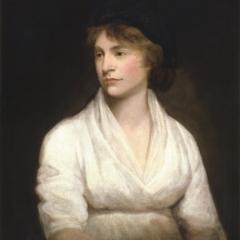
Mary Wollstonecraft
Mary Wollstonecraft

Mary Wollstonecraft, born on April 27, 1759, and died on September 10, 1797, was an influential English writer, philosopher, and feminist. She is best known for her work 'A Vindication of the Rights of Woman', which challenged the gender roles and social structures of her time. more

You May Also Like

“[Y]ou are not ashamed of your sin [in committing adultery] because so many men commit it. Man's wickedness is now such that men are more ashamed of chastity than of lechery. Murderers, thieves, perjurers, false witnesses, plunderers and fraudsters are detested and hated by people generally, but whoever will sleep with his servant girl in brazen lechery is liked and admired for it, and people make light of the damage to his soul. And if any man has the nerve to say that he is chaste and faithful to his wife and this gets known, he is ashamed to mix with other men, whose behaviour is not like his, for they will mock him and despise him and say he's not a real man; for man's wickedness is now of such proportions that no one is considered a man unless he is overcome by lechery, while one who overcomes lechery and stays chaste is considered unmanly.”

“Once upon a time there was a wicked witch and her name was Lilith Eve Hagar Jezebel Delilah Pandora Jahi Tamar and there was a wicked witch and she was also called goddess and her name was Kali Fatima Artemis Hera Isis Mary Ishtar and there was a wicked witch and she was also called queen and her name was Bathsheba Vashti Cleopatra Helen Salome Elizabeth Clytemnestra Medea and there was a wicked witch and she was also called witch and her name was Joan Circe Morgan le Fay Tiamat Maria Leonza Medusa and they had this in common: that they were feared, hated, desired, and worshiped.”

“Freedom is not the absence of commitment, and to be committed to something or to someone does not mean the loss of freedom. But freedom exists in the realm of the unbound and to be free is to be committed to that which is a part of the unbound realm. Whatever sets your soul to flight is freedom. If someone sets your soul to flight, to stay with that person is not to lose freedom but to stay with that person is to retain freedom. Together you have what is unbound. Whatever will swell your spirit and give you wings, is freedom, and it is a fault if you let go of that for the very reason that you are afraid of losing your freedom and in doing so you have in fact let go of what will keep you unbound.”

“. . . [O]nce we begin to feel deeply all the aspects of our lives, we begin to demand from ourselves and from our life-pursuits that they feel in accordance with that joy which we know ourselves to be capable of. Our erotic knowledge empowers us, becomes a lens through which we scrutinize all aspects of our existence, forcing us to evaluate those aspects honestly in terms of their relative meaning within our lives." "The erotic is a resource within each of us that lies in a deeply female and spiritual plane, firmly rooted in the power of our unexpressed or unrecognized feeling." "Of course, women so empowered are dangerous. So we are taught to separate the erotic from most vital areas of our lives other than sex.”

“In the cage is the lion. She paces with her memories. Her body is a record of her past. As she moves back and forth, one may see it all: the lean frame, the muscular legs, the paw enclosing long sharp claws, the astonishing speed of her response. She was born in this garden. She has never in her life stretched those legs. Never darted farther than twenty yards at a time. Only once did she use her claws. Only once did she feel them sink into flesh. And it was her keeper's flesh. Her keeper whom she loves, who feeds her, who would never dream of harming her, who protects her. Who in his mercy forgave her mad attack, saying this was in her nature, to be cruel at a whim, to try to kill what she loves. He had come into her cage as he usually did early in the morning to change her water, always at the same time of day, in the same manner, speaking softly to her, careful to make no sudden movement, keeping his distance, when suddenly she sank down, deep down into herself, the way wild animals do before they spring, and then she had risen on all her strong legs, and swiped him in one long, powerful, graceful movement across the arm. How lucky for her he survived the blow. The keeper and his friends shot her with a gun to make her sleep. Through her half-open lids she knew they made movements around her. They fed her with tubes. They observed her. They wrote comments in notebooks. And finally they rendered a judgment. She was normal. She was a normal wild beast, whose power is dangerous, whose anger can kill, they had said. Be more careful of her, they advised. Allow her less excitement. Perhaps let her exercise more. She understood none of this. She understood only the look of fear in her keeper's eyes. And now she paces. Paces as if she were angry, as if she were on the edge of frenzy. The spectators imagine she is going through the movements of the hunt, or that she is readying her body for survival. But she knows no life outside the garden. She has no notion of anger over what she could have been, or might be. No idea of rebellion. It is only her body that knows of these things, moving her, daily, hourly, back and forth, back and forth, before the bars of her cage.”