Quotessence
Home / Quotes / Quote by James Joyce

Quote by James Joyce

“Mi hai fatto confessare le paure che sento. Ma ti dirò anche che cos'è che non mi fa paura. Non mi fa paura esser solo o venir sprezzato per un altro o lasciare tutto ciò che tocchi lasciare. E non mi fa paura commettere un errore, anche un grande errore, un errore che duri quanto la vita e magari tutta l'eternità.”

Quote by James Joyce

Work

A Portrait of the Artist as a Young Man

James Joyce's novel delves into the life and development of Stephen Dedalus, a young man's journey towards self-discovery and artistic expression. more

Author
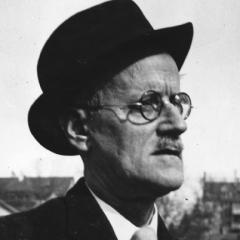
James Joyce
James Joyce

James Joyce, born on February 2, 1882, and died on January 13, 1941, was an Irish novelist and one of the greatest writers of the 20th century. Known for his unique narrative techniques and profound psychological insights, Joyce is celebrated for his contributions to modernist literature. His most famous work is 'Ulysses', which is considered one of the greatest literary works of the 20th century. Other notable works include 'Dubliners' and 'Finnegans Wake'. more

You May Also Like

“Perhaps the most dangerous by-product of the Age of Intellect is the unconscious growth of the idea that the human brain can solve the problems of the world. Even on the low level of practical affairs this is patently untrue. Any small human activity, the local bowls club or the ladies’ luncheon club, requires for its survival a measure of self-sacrifice and service on the part of the members. In a wider national sphere, the survival of the nation depends basically on the loyalty and self‑sacrifice of the citizens. The impression that the situation can be saved by mental cleverness, without unselfishness or human self-dedication, can only lead to collapse.”

“A cult is a group of people who share an obsessive devotion to a person or idea. The cults described in this book use violent tactics to recruit, indoctrinate, and keep members. Ritual abuse is defined as the emotionally, physically, and sexually abusive acts performed by violent cults. Most violent cults do not openly express their beliefs and practices, and they tend to live separately in noncommunal environments to avoid detection. Some victims of ritual abuse are children abused outside the home by nonfamily members, in public settings such as day care. Other victims are children and teenagers who are forced by their parents to witness and participate in violent rituals. Adult ritual abuse victims often include these grown children who were forced from childhood to be a member of the group. Other adult and teenage victims are people who unknowingly joined social groups or organizations that slowly manipulated and blackmailed them into becoming permanent members of the group. All cases of ritual abuse, no matter what the age of the victim, involve intense physical and emotional trauma. Violent cults may sacrifice humans and animals as part of religious rituals. They use torture to silence victims and other unwilling participants. Ritual abuse victims say they are degraded and humiliated and are often forced to torture, kill, and sexually violate other helpless victims. The purpose of the ritual abuse is usually indoctrination. The cults intend to destroy these victims' free will by undermining their sense of safety in the world and by forcing them to hurt others. In the last ten years, a number of people have been convicted on sexual abuse charges in cases where the abused children had reported elements of ritual child abuse. These children described being raped by groups of adults who wore costumes or masks and said they were forced to witness religious-type rituals in which animals and humans were tortured or killed. In one case, the defense introduced in court photographs of the children being abused by the defendants[.1] In another case, the police found tunnels etched with crosses and pentacles along with stone altars and candles in a cemetery where abuse had been reported. The defendants in this case pleaded guilty to charges of incest, cruelty, and indecent assault.[2] Ritual abuse allegations have been made in England, the United States, and Canada.[3] Many myths abound concerning the parents and children who report ritual abuse. Some people suggest that the tales of ritual abuse are "mass hysteria." They say the parents of these children who report ritual abuse are often overly zealous Christians on a "witch-hunt" to persecute satanists. These skeptics say the parents are fearful of satanism, and they use their knowledge of the Black Mass (a historically well-known, sexualized ritual in which animals and humans are sacrificed) to brainwash their children into saying they were abused by satanists.[4] In 1992 I conducted a study to separate fact from fiction in regard to the disclosures of children who report ritual abuse.[5] The study was conducted through Believe the Children, a national organization that provides support and educational sources for ritual abuse survivors and their families.”

“Christine did not live, or love, as most people do. She lived boundlessly, as generous as she could be cruel, prepared to give her life at any moment for a worthy cause, but rarely sparing a thought for the many casualties that fell in her wake.”

“So this was it, she thought. So many times she'd wondered. True sacrifice was the surrender of one sacred thing in favor of keeping another. No matter how prudent or cautious one was, in the end something precious was lost. Whether the claim was in the name of family or duty or honor or truth, it exacted a terrible price. To her dismay, she did not feel the pride or pleasure that Bledig had claimed when he spoke of the sacrifices he had made for her and their children. For Alwen, sacrifice brought grief and guilt, and an unbearable sense of uncertainty.”