“Some Christians pretend that Christianity was not established by the sword; but of what period of time do they speak? It was impossible that twelve men could begin with the sword: they had not the power; but no sooner were the professors of Christianity sufficiently powerful to employ the sword than they did so, and the stake and faggot too; and Mahomet could not do it sooner. By the same spirit that Peter cut off the ear of the high priest's servant (if the story be true) he would cut off his head, and the head of his master, had he been able. Besides this, Christianity grounds itself originally upon the [Hebrew] Bible, and the Bible was established altogether by the sword, and that in the worst use of it — not to terrify, but to extirpate. The Jews made no converts: they butchered all. The Bible is the sire of the [New] Testament, and both are called the word of God. The Christians read both books; the ministers preach from both books; and this thing called Christianity is made up of both. It is then false to say that Christianity was not established by the sword.”
Quote by Thomas Paine
Book:The age of reason
Work
The age of reason
Pensado by Thomas Paine, this seminal text delves into the author's beliefs regarding the role of reason in understanding the world and its implications for religion and governance. It is a critical examination of the supernatural and the divine, advocating for a rational approach to understanding the universe. more
Author
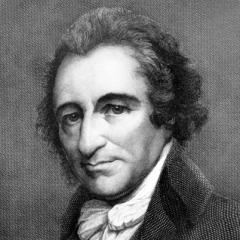
Thomas Paine
Thomas Paine, born on February 9, 1737, and died on June 8, 1809, was a prominent American writer, political figure, and philosopher during the American Revolutionary War. He is renowned for his radical democratic ideas and his contributions to the American independence movement. more
You May Also Like
Source: The Eden Fruitarian Guidebook
“...butcher, baker, fusion-reactor maker.”
Source: Neptune's Brood
Source: The Last Star
Source: I Capture The Castle
Source: Omphalos
“Better the butcher than the meat.”
Source: A Dance with Dragons
Source: Secrets of a Summer Night
Source: Birds of Wonder
Source: Food Wars!: Shokugeki no Soma, Vol. 2