Quotessence
Home / Quotes / Quote by Hilaire Belloc

Quote by Hilaire Belloc

“The essential of the guild-idea is that [of] men pursuing the same form of activity, but only in cooperation limited to the end of preserving the economic freedom-that is the property and livelihood-of each member of the guild.”

Quote by Hilaire Belloc

Work

The Crisis Of Civilization

This book delves into the multifaceted issues threatening the stability and sustainability of contemporary civilization, including environmental degradation, economic instability, and political conflicts. It examines historical precedents and contemporary scenarios to analyze the potential pathways to collapse and offers insights into potential solutions and ways to avert such crises. more

Author
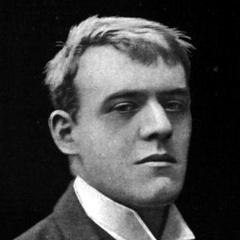
Hilaire Belloc
Hilaire Belloc

Hilaire Belloc was an English writer, poet, and historian, born on July 27, 1870, and died on July 16, 1953. He is recognized for his contributions to poetry, fiction, and political commentary. more

You May Also Like

“The vast growth of the proletariat, the concentration of ownership into the hands of a few owners, and the exploitation by those owners of the mass of the community, had no fatal or necessary connection with the discovery of new and perpetually improving methods of production. The evil proceeded in direct historical sequence, proceeded patently and demonstrably, from the fact that England, the seed-plot of the Industrial System, was already captured by a wealthy oligarchy before the series of great discoveries began.”

“Apologists for modernity and capitalism within the Catholic Church insist that capitalism is compatible with defined dogmas declared by the magisterium, with the tenets of natural law, and with the incontrovertible truths expressed in the divine positive law. Catholics such as this writer are insulted with the epithets of "socialists" or "unpatriotic" or "ignorant" for failing to see the good brought by modern democracy, for calling into question the nature of the supposed freedoms granted by governments elected through popular sovereignty without reference to Christ the King and His Vicar the Pope, and for insisting on a return to an understanding of human life predicated on the essential nature of human family and divine worship to the happiness of man on earth and his beatitude in Heaven. This writer is waiting for an explanation of how the separation of the state from the Church has lent support to the absolute sanctity of life from conception to natural death. He desires to see proof that democratically elected governments and their citizens are committed to prohibiting divorce and the destruction of the family as mandated by God when He physically walked the earth two thousand years ago . . . If indeed there is a difference on the moral plane between capitalist consumption of goods and communist redistribution of goods, it is high time that man be given evidence of the existence of this singular truth which heretofore has been an amazingly well kept secret. Other than the fact that both communists and capitalists seek to produce as many material things as possible with the capitalists having far more success thereat, none has convincingly demonstrated that aught else separates the two systems in their impact on the understanding of the sanctity of human life, the controls placed on the conduct of human life, and the ultimate end of human life. (pages 171-172)”

“The German experience brings us face to face with the major problem of the revolution in Western Europe. In these countries, the old bourgeois mode of production and the centuries-old civilisation which has developed with it have completely impressed themselves upon the thoughts and feelings of the popular masses. Hence, the mentality and inner character of the masses here is quite different from that in the countries of the East, who have not experienced the rule of bourgeois culture; and this is what distinguishes the different courses that the revolution has taken in the East and the West.”

“Through their donations and work for voluntary organizations, the charitable rich exert enormous influence in society. As philanthropists, they acquire status within and outside of their class. Although private wealth is the basis of the hegemony of this group, philanthropy is essential to the maintenance and perpetuation of the upper class in the United States. In this sense, nonprofit activities are the nexus of a modern power elite.”

“cultural cringe which prevents other people from challenging them. the Italian philosopher Antonio Gramsci used the term ‘cultural hegemony’ to describe the way in which ideas and concepts which benefit a dominant class are universalised. they become norms, adopted whole and unexamined, which shape our thinking”