Quotessence
Home / Quotes / Quote by Charles Spurgeon

Quote by Charles Spurgeon

“Remember how it is written of Job, “The Lord turned the captivity of Job, when he prayed for his friends.” While he prayed for himself, he remained a captive; but when he prayed for those unfriendly friends of his, then the Lord smiled upon him, and loosed his captivity”

Quote by Charles Spurgeon

Author
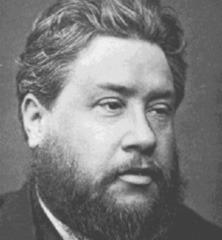
Charles Spurgeon
Charles Spurgeon

Charles Haddon Spurgeon, born on June 19, 1834, was a prominent Christian preacher from the United Kingdom. Known as the 'Preacher of London,' he was renowned for his passionate sermons and profound influence. Spurgeon's preaching drew thousands of listeners, and his writings had a widespread impact on the Christian world. more

You May Also Like

“These kinds of circumstances and bodily chemistry can steal the gifts of divine love too, as if all of God's love letters and picture albums are burning up in a fire just outside the door, a fire which we are helpless to stop. We sit there, helpless in the dark of divine absence, tied to this chair, present only to ash and wheeze, while all we hold dear seems lost forever. We even wonder if we're brought this all on ourselves. It's our fault. God is against us. We've forfeited God's help.”

“Lastly, Spurgeon reminds us that piety and devotion to Christ are not preferable alternatives to controversy, but rather that they should - when circumstances demand it - lead to the latter. He was careful to maintain that order. The minister who makes controversy his starting point will soon have a blighted ministry and spirituality will wither away. But controversy which is entered into out of love for God and reverence for His Name, will wrap a man's spirit in peace and joy even when he is fighting in the thickest of battle. The piety which Spurgeon admired was not that of a cloistered pacifism but the spirit of men like William Tyndale and Samuel Rutherford who, while contending for Christ, could rise heavenwards, jeopardizing 'their lives unto the death in the high places of the field'. At the height of his controversies Spurgeon preached some of the most fragrant of all his sermons.”

“A group of American Christians in the nineteenth century planned to visit London for a week. Their friends, excited for the opportunity, encouraged them to go hear two of London’s famous preachers and bring back a report. On Sunday morning after their arrival, the Americans attended Joseph Parker’s church. They discovered that his reputation for eloquent oratory was well deserved. One exclaimed after the service, “I do declare, it must be said, for there is no doubt, that Joseph Parker is the greatest preacher that ever there was!” The group wanted to return in the evening to hear Parker again, but they remembered that their friends would ask them about another preacher named Charles Spurgeon. So on Sunday evening they attended the Metropolitan Tabernacle, where Spurgeon was preaching. The group was not prepared for what they heard, and as they departed, one of them spoke up, “I do declare, it must be said, for there is no doubt, that Jesus Christ is the greatest Savior that ever there was!”