Quotessence
Home / Quotes / Quote by Guy de Maupassant

Quote by Guy de Maupassant

“Iat-o eterna: Femeia era intradevar pentru el copilul de douasprezece ori mai imour de care vorbeste poetul (...) fiinta slaba, periculoasa, in chip misterios tulburatoare..." Abatele Marignan - O viata”

Quote by Guy de Maupassant

Author
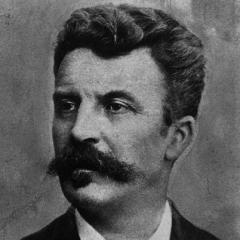
Guy de Maupassant
Guy de Maupassant

Guy de Maupassant, born on August 5, 1850 and died on July 6, 1893, was a renowned French novelist and master of the short story, often hailed as the 'King of Short Stories'. With his keen observation and unique writing style, Maupassant produced a vast array of short stories reflecting social realities and human weaknesses, which have had a profound impact on literature. more

You May Also Like

“On problems finding female ancestors,of any background, remember "I cannot put gas in my car without a note from my husband. The Car, the house, and everything else I think that I own is in his name. When I die, I cannot decide who will receive my personal effects. If he dies first I may be allowed to stay in my own home, or may be given a certain number of days to vacate the premises. Any real estate I inherit from my husband is not mine to sell of devise in a will. All the money I earn belongs to my husband. I cannot operate or engage in business in my own name. If my ancestor is enslaved, I cannot marry, may not be allowed to raise my own children, join a church, travel freely, own property or testify against those who harm me.”

“Thus far, our responsibility for how we treat chickens and allow them to be treated in our culture is dismissed with blistering rhetoric designed to silence objection: “How the hell can you compare the feelings of a hen with those of a human being?” One answer is, by looking at her. It does not take special insight or credentials to see that a hen confined in a battery cage is suffering, or to imagine what her feelings must be compared with those of a hen ranging outside in the grass and sunlight. We are told that we humans are capable of knowing just about anything that we want to know—except, ironically, what it feels like to be one of our victims. We are told we are being “emotional” if we care about a chicken and grieve over a chicken’s plight. However, it is not “emotion” that is really under attack, but the vicarious emotions of pity, sympathy, compassion, sorrow, and indignity on behalf of the victim, a fellow creature—emotions that undermine business as usual. By contrast, such “manly” emotions as patriotism, pride, conquest, and mastery are encouraged.”