“The moral, dear child, is that such powers are never to be considered as the main object; it ought in fact to be obvious from the start that any one's True Will must be deeper and more comprehensive than any mere technical achievement. I will go further and say that any such endeavour must be a magical mistake, like cherishing a gun or a clock or a fishing-rod for its own sake, and not for the use that one can make of it. Indeed, that remark goes to the root of the matter; for all these powers, if we understand them properly, are natural by-products of one's real Great Work. My own experience was very convincing on this point; for one power after another came popping up when it was least wanted, and I saw at once that they represented so many leaks in my boat. And really they are quite a bit of a nuisance. Their possession is so flattering, and their seduction so subtle. One understands at once why all the first-class Teachers insist so sternly that the Siddhi (or Iddhi) must be rejected firmly by the Aspirant, if he is not to be side-tracked and ultimately lost.”
Quote by Aleister Crowley
Book:Magick Without Tears
Work
Magick Without Tears
Browse quotes and source details for this work. more
Author
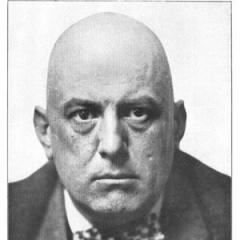
Aleister Crowley
Aleister Crowley, a British poet, mystic, and writer, was born on October 12, 1875, and died on December 1, 1947. He is known for his poetic works and mystical practices, and is considered one of the most controversial figures of the 20th century. more
You May Also Like
Source: The Inward Journey
“It hurts when someone fakes loving you just because they want to use you.”
“One should be accountable to his own soul.”
Source: The Science of Spiritual Enlightenment: A Book for Eternity
Source: The Lost Compass
Source: Homecoming
Source: Good and Mad: The Revolutionary Power of Women's Anger