Quotessence
Home / Quotes / Quote by Greg Iles

Quote by Greg Iles

“What do you think, Doc?" The patient's question penetrated Auster's reverie. "I think you're doing about as well as you're going to do, Mr. Johnston. You're not going to play ball for the Yankees, but you're not going to drop dead anytime soon either. You'll probably still be fishing when they bury me." Johnston gave a little laugh. "I hope so, no offense. But I was thinking, Doc, you know. . . . I might need some tests." Auster looked back in puzzlement. Johnston had the tone of a patient who'd read some article on preven tive medicine in [i]Reader's Digest[/i]. He probably wanted a goddamn sixty-four-slice CAT scan of his heart.”

Quote by Greg Iles

Work

Third Degree

Browse quotes and source details for this work. more

Author

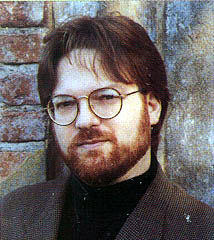
Greg Iles
Greg Iles

Greg Iles, born in 1960, is a British novelist known for his suspense and crime novels. His works are highly appreciated by readers for their intricate plots and in-depth character development. Iles' novels typically revolve around complex storylines and richly drawn characters, showcasing his profound understanding of psychology and emotions. more

You May Also Like

“The inscape is an autohypnotic internal landscape populated by the patient's alters (Young, 1994). The alters typically have distinct bodies in the inscape, with inter-alter consensus as to what each one looks like. Some DID patients have reported having access to such inscapes (presumably through autohypnosis) prior to any treatment. If a dissociative patient seems to have no inscape, guided hypnosis or guided imagery may provide one, for example, as developed by George Fraser (1991) in his Dissociative Table Technique. But in my experience even this therapist initiative typically arrives in a space connecting to a seemingly "ready-made" extended inscape, simple or elaborate, whose "inhabitants" (alters) claim that it preexisted the hypnotic intervention. The space and extended inscape will also have idiosyncratic features, perplexing to the patient and therapist, which later (even years later) prove to have dynamic significance.”

“Life can be generous, but leaves us with a trilemma: How can we reconcile three diverse features: ‘I’, 'me' and the 'others'. Since the “I” entails what I want; the “me” what others expect of me and the “others” what others themselves want. The bridges between "individuality", “surroundings” and "otherness" can be abysmal and very often waiting to be restored. (“I am on my own side, but I can listen “ )”