Quotessence
Home / Quotes / Quote by Fyodor Dostoevsky

Quote by Fyodor Dostoevsky

“It is a law, doubtless, but a law neither more nor less normal than that of destruction even self-destruction. Is it possible that the normal law of humanity is contained in this sentiment of self preservation?”
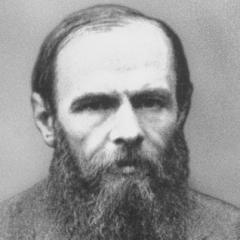
Quote by Fyodor Dostoevsky

Work

The Idiot

Focusing on the life of a seemingly naive individual, the story delves into the complexities of society and the individual's place within it. more

Author

Fyodor Dostoevsky
Fyodor Dostoevsky

A renowned Russian novelist and a pioneer of psychological novels. His works deeply reveal the complexity of human nature and the injustice of society, having a profound impact on literature worldwide. more

You May Also Like

“When you're comfortable within yourself, you don't care about others' problems or the challenges they face in life. However, when you're in distress, the memories of those you've abandoned leaving in dire situations, come back to haunt you. How selfish humans are!”

“Left to their own devices, humans will inevitably resort to baser impulses, to self-eradicating violence. Within every human being is the power to see the world as it is and still be driven to destroy…Left to their own devices, humans will inevitably care for another at great detriment to themselves. Within every human being is the power to see the world as it is and still be compelled to save it. It is not one side or the other. Both are true. Flip the coin and see where it lands.”

“He suffers, so to speak, from the violence done to him by the self. The analogous passion of Christ signifies God's suffering on account of the injustice of the world and the darkness of man. The human and the divine set up a relationship of complimentarity with compensating effects. Through the Christ-symbol, man can get to know the real meaning of his suffering: he is on the way to realizing his wholeness. As a result of the integration of conscious and unconscious, his ego enters the “divine” realm, where it participates in “God's suffering.” The cause of the suffering is in both cases the same, namely “incarnation,” which on the human level appears as “individuation.”