Quotessence
Home / Quotes / Quote by Eudora Welty

Quote by Eudora Welty

“That summer lying in the long grass with my head propped up against the back of a saddle, with the zenith above me and the drop of distance below, I listened to the mountain silence until I could hear as far into it as the faintest clink of a cowbell. In the mountains, what might be out of sight had never really gone away. Like the mountain, that distant bell would always be there. It would keep reminding.”

Quote by Eudora Welty

Work

On Writing

This book delves into the intricacies of writing, providing a mix of personal anecdotes and professional guidance. It covers various aspects of the writing process, from crafting compelling characters and structuring narratives to the importance of editing and revising. The author shares their own journey as a writer, offering readers a unique perspective on the challenges and rewards of the craft. more

Author

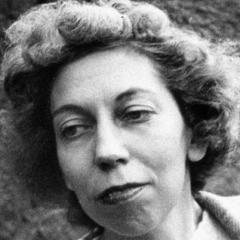
Eudora Welty
Eudora Welty

Eudora Welty was an American author renowned for her profound portrayal of life in the rural South. Her works often focus on the lives and characters of the Southern countryside, celebrated for their delicate emotions and unique narrative style. more

You May Also Like

“Omnipotent-benevolent simply means that God is all-powerful and well-meaning.' 'I understand the concept. It's just . . . there seems to be a contradiction.' 'Yes. The contradiction is pain. Man's starvation, war, sickness . . .' 'Exactly!' Chartrand knew the camerlengo would understand. 'Terrible things happen in this world. Human tragedy seems like proof that God could not possibly be both all-powerful and well-meaning. If He loves us and has the power to change our situation, He would prevent our pain, wouldn't He?' The camerlengo frowned. 'Would He?' Chartrand felt uneasy. Had he overstepped his bounds? Was this one of those religious questions you just didn't ask? 'Well . . . if God loves us, and He can protect us, He would have to. It seems He is either omnipotent and uncaring, or benevolent and powerless to help.' 'Do you have children, Lieutenant?' Chartrand flushed. 'No, signore.' 'Imagine you had an eight-year-old son . . . would you love him?' 'Of course.' 'Would you let him skateboard?' Chartrand did a double take. The camerlengo always seemed oddly "in touch" for a clergyman. 'Yeah, I guess,' Chartrand said. 'Sure, I'd let him skateboard, but I'd tell him to be careful.' 'So as this child's father, you would give him some basic, good advice and then let him go off and make his own mistakes?' 'I wouldn't run behind him and mollycoddle him if that's what you mean.' 'But what if he fell and skinned his knee?' 'He would learn to be more careful.' The camerlengo smiled. 'So although you have the power to interfere and prevent your child's pain, you would choose to show your love by letting him learn his own lessons?' 'Of course. Pain is part of growing up. It's how we learn.' The camerlengo nodded. 'Exactly.”

“When you are silent on the truth, you have given a transport fare for the lie to travel and spread fast.”