“He surrendered utterly to the power that to him seemed the highest on earth, to whose service he felt called, which promised him elevation and honours: the power of intellect, the power of the Word, that lords it with a smile over the unconscious and inarticulate. To this power he surrendered with all the passion of youth, and it rewarded him with all it had to give, taking from him inexorably, in return, all that it is wont to take. It sharpened his eyes and made him see through the large words which puff out the bosoms of mankind; it opened for him men’s souls and his own, made him clairvoyant, showed him the inwardness of the world and the ultimate behind men’s words and deeds. And all that he saw could be put in two words: the comedy and the tragedy of life. And then, with knowledge, its torment and its arrogance, came solitude; because he could not endure the blithe and innocent with their darkened understanding, while they in turn were troubled by the sign on his brow. But his love of the word kept growing sweeter and sweeter, and his love of form; for he used to say (and had already said it in writing) that knowledge of the soul would unfailingly make us melancholy if the pleasures of expression did not keep us alert and of good cheer.”
Quote by Thomas Mann
Work
Death in Venice and Other Stories
Browse quotes and source details for this work. more
Author
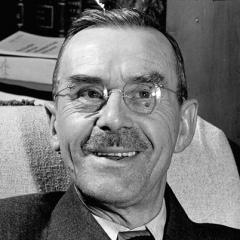
Thomas Mann
Thomas Mann, born on June 6, 1875, and died on August 12, 1955, was a German novelist and one of the greatest writers of the 20th century. Known for his profound psychological portrayals and rich imagination, his works extensively covered themes such as individual and society, history and reality. His masterpieces include 'Buddenbrooks' and 'The Magic Mountain'. more
You May Also Like
Source: Thus Spoke Zarathustra
“Fear not death for the sooner we die, the longer we shall be immortal.”
“Si tu te sens seul lorsque tu es seul, tu es en mauvaise compagnie.”
Source: The Question of Red
Source: Letters to a Young Poet
“Solitude causes more wounds than it was ever meant to heal.”
Source: De Sade: A Critical Biography
Source: Deep Country: Five Years in the Welsh Hills
Source: Elsewhere and Otherwise: Essays