Quotessence
Home / Quotes / Quote by Herman Melville

Quote by Herman Melville

“I joy that Death is this Democrat; and hopeless of all other real and permanent democracies, still hug the thought, that though in life some heads are crowned with gold, and some bound round with thorns, yet chisel them how they will, head-stones are all alike.”

Quote by Herman Melville

Work

Pierre; Or, The Ambiguities

Written by a renowned author, this novel delves into the intricate psychological and ethical challenges faced by its protagonist, Pierre. The story is renowned for its exploration of themes such as identity, love, and the struggle for self-understanding. more

Author
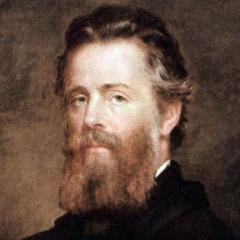
Herman Melville
Herman Melville

Herman Melville was a renowned 19th-century American novelist known for his profound psychological descriptions and unique literary style. His masterpiece, 'Moby-Dick', is considered a classic of American literature. more

You May Also Like

“Jane has been dead for more than two decades. Earlier this year I grieved for her in a way I had never grieved before. At eighty-six, I was sick and thought I was dying. Twenty and twenty-one years ago, every day of her dying for eighteen months, I stayed by her side. It was miserable that Jane should die so young, and it was redemptive that I could be with her every hour of every day. Last February I grieved again, this time that she would not sit over me as I died.”

“Latter-day capitalism. Like it or not, it's the society we live in. Even the standard of right and wrong has been subdivided, made sophisticated. Within good, there's fashionable good and unfashionable good, and ditto for bad. Within fashionable good, there's formal and then there's casual; there's hip, there's cool, there's trendy, there's snobbish. Mix 'n' match. Like pulling on a Missoni sweater over Trussardi slacks and Pollini shoes, you can now enjoy hybrid styles of morality. It's the way of the world -- philosophy starting to look more and more like business administration.”

“I remember one of the last things Mother said to us, one of the very last things. In my mind, it has become the last thing, and maybe it was. She was lying on the cedar frame bed in the back bed-room in the early summer, with the bed moved over right against the window. The window was open to let the breeze and birdsong and sunlight in, the light rushing in through the lace curtains. She had lost a lot of weight and had had a hard time, but was never more beautiful in the way that there can be nothing more beautiful than dignity. "I've seen a lot," she said, and smiled, and it was not an act for us, it was not a thing said for our benefit. She was just saying it, and smiling. She was just brave, was all.”

“I remember clearly in the hospital how I felt this strange closeness with God, how I did not feel like dry grass. I was becoming less and less, but I becoming less and less, but I was not reduced to nothing God's love was everywhere, sticking to everything. Love was in my husband's hand on my back, steadying me, a lightness under my feet, all over Zach's velvety wars. I flushed with embarrassment when I described this feeling to my friends, stumbling as I tried to explain its sudden appearance (Wasn't it there before?), that love itself was suddenly more real to me than my own thoughts. Despair was never far away, but somehow the seams of the universe had come undone, and all the splendid, ragged edges were showing. And they brought me close than I've e ed been to the truth of this experiment— living— and how the horror and the beauty of it feels almost blinding.”