Quotessence
Home / Quotes / Quote by Aleksandr Solzhenitsyn

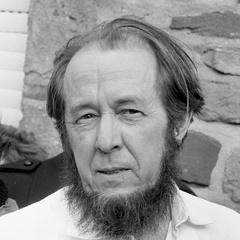
Quote by Aleksandr Solzhenitsyn

“Nineteenth-century Russian literature, swooning with compassion for the suffering brother, had created for Nerzhin, and for everyone reading it for the first time, the image of a haloed, silvery-haired People, embodying all wisdom, moral purity, and spiritual grandeur. But that was far away, on bookshelves; it was somewhere else, in the villages and fields at the crossroads of the nineteenth century. The heavens unfolded, the twentieth century came, and those places had long since ceased to exist under Russian skies.”

Quote by Aleksandr Solzhenitsyn

Work

The First Circle

This book is a profound exploration of the human condition, delving into the complexities of life, morality, and the search for meaning. Set in a fictional setting, it follows a group of individuals who are engaged in a quest for self-discovery and understanding. more

Author

Aleksandr Solzhenitsyn

Aleksandr Solzhenitsyn, a Russian novelist, was born on December 11, 1918, and died on August 3, 2008. He is renowned for his works that profoundly exposed the dark side of the Soviet political system and is considered one of the greatest writers of the 20th century. more

You May Also Like

“Nationalism always preserved this initial intimate loyalty to the government and never quite lost its function of preserving a precarious balance between nation and state on one hand, between the nationals of an atomized society on the other. Native citizens of a nation-state frequently looked down upon naturalized citizens, those who had received their rights by law and not by birth, from the state and not from the nation....”

“The fall of the protecting class walls transformed the slumbering majorities behind all parties into one great unorganized, structureless mass of furious individuals who had nothing in common except their vague apprehension that the hopes of party members were doomed, that, consequently, the most respected, articulate and representative members of the community were fools and that all the powers that be were not so much evil as they were equally stupid and fraudulent. It was of no great consequence for the birth of this new terrifying negative solidarity that the unemployed worker hated the status quo and the powers that be in the form of the Social Democratic Party, the expropriated small property owner in the form of a centrist or rightist party, and the former members of the middle and upper classes in the form of the traditional extreme right. The number of this mass of generally dissatisfied and desperate men increased rapidly in Germany and Austria after the first World War, when inflation and unemployment added to the disrupting consequences of military defeat; they existed in great proportion in all the succession states, and they have supported the extreme movements in France and Italy since the second World War.”

“What a relief, Nadya thought; in that light he would not be able to tell that she had been crying. "You mean if it weren't for the blackout you wouldn't have come?" Dasha took up Shchagov's tone, flirting unconsciously, as she did with every unmarried man she met. "By no means, never. In bright light women's faces are deprived of all their charm; it reveals their spiteful expressions, their envious glances, their premature wrinkles, their heavy cosmetics." Nadya shuddered at the words "envious glances"—it was as if he had overheard their argument. Shchagov went on:" If I were a woman, I would make it a law that lights be kept low. Then everyone would soon have a husband." Dasha looked disapprovingly at Shchagov. He always talked that way, and she didn't like it. All his phrases seemed memorized, insincere.”

“The absolute monarch was supposed to serve the interests of the nation as a whole, to be the visible exponent and proof of the existence of such a common interest. The enlightened despotism was based on [Duc de] Rohan's "kings command the peoples and interest commands the king"; with the abolition of the king and sovereignty of the people, this common interest was in constant danger of being replaced by a permanent conflict among class interests and struggle for control of state machinery, that is, by a permanent civil war.”