Quotessence
Home / Quotes / Quote by Elizabeth Prentiss

Quote by Elizabeth Prentiss

“This is the testimony of all the good books, sermons, hymns, and memoirs I read--that God's ways are infinitely perfect; that we are to love Him for what He is and therefore equally as much when He afflicts as when He prospers us; that there is no real happiness but in doing and suffering His will; and that this life is but a scene of probation through which we pass to the real life above.”

Quote by Elizabeth Prentiss

Work

Stepping Heavenward

In this novel, the protagonist embarks on a journey of introspection and enlightenment, navigating complex emotional landscapes and profound philosophical questions. more

Author

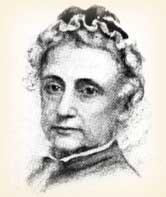
Elizabeth Prentiss
Elizabeth Prentiss

Elizabeth Prentiss was an American author born on October 26, 1818, and died on August 13, 1878. Known for her works on religious and moral education, she has left a lasting impact on readers. more

You May Also Like

“Some animal rights activists are demanding vegetarianism, even veganism now, or nothing. But since only 4 or 5 percent of Americans claim to be vegetarians, 'nothing' is the far more likely outcome. I ask these activists to weigh the horrors of Bladen County's industrial farms and the Tar Heel slaughterhouse against the consequences of doing nothing to alleviate the hour-to-hour sufferings of its victims. Is not a life lived off the factory farm and a death humanely inflicted superior to the terrible lives we know they lead and the horrible deaths we know they suffer in Bladen County today?”

“One day, when I thought I was alone, I prayed in church. While making this offering before the cross, a parishioner came up to me, put her arm around my shoulder and prayed, ‘Dear God, please heal Father Jim. And give me his cancer.’ I was incredulous. I looked at her, and then back to the Lord and quietly prayed, ‘If she insists, Lord, hear our prayer!’ Later I was able to pray, ‘Lord, rather than give my cancer to her, give her heart of love to me – the love that prompted her to deny her very self and pray in such a loving way.”

“It is our contemporary culture’s tragedy to have lost any sense of suffering as a positive dimension of human existence. Beginning with the premise that life ought to be without pain, we make suffering something to be avoided at all cost. We consider the equation between evil and suffering so self-evident that we make avoiding suffering the equal of fighting evil. No wonder we are the most narcotized generation ever to inhabit the earth, searching for ever more effective addictive patterns to anaesthetize our existence.”

“Towards the end of the Second World War, when I was sixteen years old, I was taken out of school and forced into the army. After a brief period of training at a base in Wüzburg, I arrived at the front, which by that time had already crossed the Rhine into Germany. There were well over a hundred in my company, all of whom were very young. One evening the company commander sent me with a message to battalion headquarters. I wandered all night long through destroyed, burning villages and farms, and when in the morning I returned to my company I found only the dead, nothing but dead, overrun by a combined bomber and tank assault. I could see only dead and empty faces, where the day before I had shared childhood fears and youthful laughter. I remember nothing but a wordless cry. Thus I see myself to this very day, and behind this memory all my childhood dreams crumble away.”

“All believers in Christ, the Scripture teaches, will suffer-all of us. You will be glorified, Paul says, if you suffer with him. The problem with too many of us is not that we don't suffer, but that we assume that only Third World Christians or heroic missionaries are suffering. My boys didn't know that they were suffering in Russia; they would feel it as suffering now.”

“Pod kvazi-mitskim totalitetom tehničke racionalnosti prijeti nam inteligencija bez patosa, inteligencija kojoj nije potreban nikakav jezik koji ima svoj vlastiti smisao jer ionako sve funkcionira bez bilo kakvog proturječja; ta inteligencija ne zna za spomen jer nije ugrožena nikakvim zaboravom: čovjek kao kompjuterizirana inteligencija bez osjetljivosti na patnju i bez morala, ukratko: čovjek kao rapsodija nedužnosti jednoga glatko funkcionirajućeg stroja. Treba li doista to biti čovjek nakon smrti čovjeka?”