Quotessence
Home / Quotes / Quote by Joanne Harris

Quote by Joanne Harris

“I don't believe God really cares what you eat, or what you wear, or whom you love. I think that if God made the stars, He must have a greater perspective.”

Quote by Joanne Harris

Work

Different Class

Browse quotes and source details for this work. more
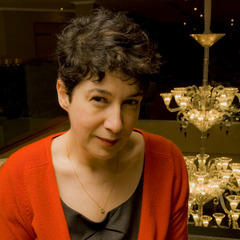
Author

Joanne Harris
Joanne Harris

Joanne Harris is a British author known for her fantasy and literary novels. Born on July 3, 1964, she graduated from the University of Cambridge. Harris's works often blend romance, mystery, and supernatural elements, enjoying great popularity among readers. more

You May Also Like

“It was not desirable that the proles should have strong political feelings. All that was required of the was a primitive patriotism which could be appealed to whenever it was necessary to make them accept longer working hours or shorter rations. And even when they became discontented, as they sometimes did, their discontent led nowhere, because, being without general ideas, they could only focus it on petty specific grievances. The larger evils invariably escaped their notice.”

“If you were raised as child by a narcissistic mom, you may have spent a lifetime being mistreated and shamed for things that you never did. Toxic shame is a result of being told you are not enough. You may feel worthless and unlovable.”

“Playing roles and acting are forms of lying. If a person acts like they really feel and it rocks the boat, they are ostracized. We promote pretense and lying as a cultural way of life. Living this way causes an inner split. It teaches us to hide and cover up our toxic shame. This sends us deeper into isolation and loneliness.”

“A family scapegoat is burdened with criticism, toxic shame, and blame for something they have not done. The wrongdoings of others are projected onto them. You were a convenient receptacle for your insecure family members who were incapable or unwilling to take responsibility for their own actions, words, and behaviors.”

“The attempt to define free will is the granddaddy of these pointless quests. We understand what it is to be coerced. It is to be a prisoner frog-marched down a hill. Coercion is something tangible. Freedom is the absence of coercion, nothing more. Events from childhood do not coerce our personalities in adulthood. We are not frog-marched by parental spankings at age six into being guilt-ridden thirty-year-olds. Our genes do not coerce our adulthood. Unlike spankings, they have a substantial statistical effect on our personality, but we are not frog-marched into being alcoholics even if our biological parents are alcoholics. Even having the genetic predisposition, there are tactics we can adopt to avoid alcoholism. We can, for example, shun drinking altogether. There are many more teetotal people with alcoholic parents than you would expect there to be by chance alone. Absent coercion, we are free. Freedom of the will, choice, the possibility of change, mean nothing more-absolutely nothing more than the absence of coercion. This means simply that we are free to change many things about ourselves. Indeed, the main facts of this book—that depressives often become nondepressives, that lifelong panickers become panic free, that impotent men become potent again, that adults reject the sex role they were raised with, that alcoholics become abstainers—demonstrate this. None of this means that therapists, parents, genes, good advice, and even dyspepsia do not influence what we do. None of this denies that there are limits on how much we can change. It only means that we are not prisoners.”