Quotessence
Home / Quotes / Quote by Lynda Barry

Quote by Lynda Barry

“I stared out the window and watched the land change like it had a mental illness. Dead and barren became spinach, chard and cabbage glittering with the pulsing spray from long-wheeled irrigators, and then a dead stockyard with knocked down fence posts and a collapsed ramp and then a dumping ground for junk cars and raw garbage with turkey buzzards circling overhead and then sudden low orchards, peaches it looked like, with migrants reaching into scraggly trees with dirty pick-sacks slung over their shoulders. And then it was barren again, looking quite scorched, and then we arrived.”

Quote by Lynda Barry

Book:Cruddy

Work

Cruddy

Browse quotes and source details for this work. more

Author

Lynda Barry
Lynda Barry

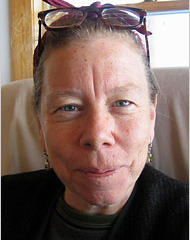
Lynda Barry, born on January 2, 1956, is a renowned cartoonist. Her works are known for their unique style and profound themes, covering personal experiences, social phenomena, and philosophical thoughts. Barry's contributions have had a significant impact on the comic industry, and her creative approach and narrative techniques have provided new perspectives for subsequent cartoonists. more

You May Also Like

“Analysis of project monitoring and evaluation of data aids in verifying whether the project goals are achieved, project targets are achieved, and concluding the effectiveness of project completion and delivery. In the pursuit of project analysis, project processes or stages of implementation are also analyzed along with examining the milestone achievement markers.”

“Sa dami ng hamon, mapapahinto ka talaga at mapapaisip: tunay pa ba ‘to, o panlabas lang—parang bago pero walang lalim? Minsan kasi, kapag pagod na pagod na tayo, doon lumalabas ang totoo— kung alin ang pinaninindigan, at alin ang pinapaganda lang para sa mata ng iba. Hindi lahat ng mukhang bago ay totoo… at hindi lahat ng tahimik ay mahina. Kung tahimik ka man ngayon, okay lang. Baka hindi ka nawawala—nagiging totoo ka lang ulit.”

“Why didn't Jacob simply refuse to go along with this bold, obvious swindle? Again, Robert Alter's insights are invaluable. When Jacob asks, 'Why have you DECEIVED me?' the Hebrew word is the same one used in chapter 27 to describe what Jacob did to Isaac. Alter then quotes an ancient rabbinical commentator who imagines the conversation the next day between Jacob and Leah. Jacob says to Leah: 'I called out "Rachel" in the dark and you answered. Why did you do that to me?' And Leah says to him, 'Your father called out "Esau" in the dark and you answered. Why did you do that to him?' His fury dies on his lips. He sees what it is like to be manipulated and deceived, and he meekly complies with Laban's offer.”