Quotessence
Home / Quotes / Quote by Frederick Marryat

Quote by Frederick Marryat

“How many troops do we embark?' inquired Philip. 'Two hundred and forty-five rank and file, and six officers. Poor fellows! There are but few of them will ever return; nay, more than one-half will not see another birthday. It is a dreadful climate. I have landed three hundred men at that horrid hole, and in six months, even before I had sailed, there were not one hundred left alive.' 'It is almost murder to send them there,' observed Philip. 'Pshaw! They must die somewhere, and if they die a little sooner, what matter? Life is a commodity to be bought and sold like any other. We send out so much manufactured goods and so much money to barter for Indian commodities. We also send out so much life, and it gives a good return to the Company.' 'But not to the poor soldiers, I am afraid.' 'No; the Company buy it cheap and sell it dear,' replied the captain, who walked forward. True, thought Philip, they do purchase human life cheap, and make a rare profit of it, for without these poor fellows how could they hold their possessions in spite of native and foreign enemies? For what a paltry and cheap annuity do these men sell their lives? For what a miserable pittance do they dare all the horrors of a most deadly climate, without a chance, a hope of return to their native land, where they might happily repair their exhausted energies, and take a new lease of life!”

Quote by Frederick Marryat

Work

The Phantom Ship

Browse quotes and source details for this work. more

Author
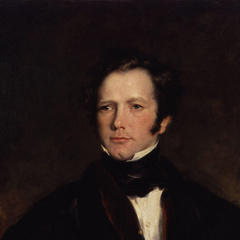
Frederick Marryat
Frederick Marryat

Frederick Marryat was a British writer and naval officer, born on July 10, 1792, and died on August 9, 1848. He is best known for his naval-themed works, particularly the 'Peter' series, which had a profound impact on children's literature. more

You May Also Like

“Si pensamos, siguiendo a Marx, que «la fuerza de trabajo no es el trabajo realmente realizado, sino la simple potencia de trabajar», entonces habrá que decir que cualquier cuerpo, humano o animal, real o virtual, femenino o masculino posee esta potencia maturbatoria, potencia de hacer eyacular, potentia gaudendi, por tanto, potencia productora de capital fijo —puesto que participa en el proceso productivo sin consumirse en el proceso mismo—.”

“La classe des ouvriers modernes, qui ne vivent qu'à la condition de trouver du travail, et qui n'en trouvent plus dès que leur travail cesse d'agrandir le capital. Les ouvriers, contraints de se vendre au jour le jour, sont une marchandise comme tout autre article de commerce ; ils subissent, par conséquent, toutes les vicissitudes de la concurrence, toutes fluctuations du marché.”

“Cependant, pour les pays les plus avancés, les mesures suivantes pourront assez généralement être applicables : 1 ̊Expropriation de la propriété foncière et confiscation de la rente foncière au profit de l’Etat. 2 ̊Impôt fortement progressif. 3 ̊Abolition de l’héritage. 4 ̊Confiscation de la propriété de tous les émigrants et de tous les rebelles. 5 ̊Centralisation du crédit dans les mains de l’Etat au moyen d’une banque nationale, avec capital de l’Etat, et avec le monopole exclusif. 6 ̊Centralisation dans les mains de l’Etat de tous les moyens de transport. 7 ̊Augmentation des manufactures nationales et des instruments de production, défrichement des terrains incultes et amélioration des terres cultivées d’après un système général. 8 ̊Travail obligatoire pour tous, organisation d’armées industrielles, particulièrement pour l’agriculture. 9 ̊Combinaison du travail agricole et industriel, ; mesures tendant à faire disparaître la distinction entre ville et campagne. 10 ̊Education publique et gratuite de tous les enfants, abolition du travail des enfants dans les fabriques tel qu’il est pratiqué aujourd’hui. Combinaison de l’éducation avec la production matérielle, etc., etc.”

“I suppose a part of me wished when I put my key in the door, it would magically open into a different apartment, a different life, a place so bright with joy and excitement that I'd be temporarily blinded when I first saw it. I pictured what a documentary film crew would capture in my face as I glimpsed this whole new world before me, like in those home improvement shows Reva liked to watch when she came over. First, I'd cringe with surprise. But then, once my eyes adjusted to the light, they'd grow wide and glisten with awe. I'd drop the keys and the coffee and wander in, spinning around with my jaw hanging open, shocked at the transformation of my dim, gray apartment into a paradise of realized dreams. But what would it look like exactly? I had no idea. When I tried to imagine this new place, all I could come up with was a cheesy mural of a rainbow, a man in a white bunny costume, a set of dentures in a glass, a huge slice of watermelon on a yellow plate—an odd prediction, maybe, of when I'm ninety-five and losing my mind in an assisted-living facility where they treat the elderly residents like retarded children. I should be so lucky, I thought. I opened the door to my apartment, and, of course, nothing had changed.”