Quotessence
Home / Quotes / Quote by Mark Twain

Quote by Mark Twain

Work

The Adventures of Tom Sawyer

Mark Twain's 'The Adventures of Tom Sawyer' is a seminal work of American literature, offering a vivid portrayal of childhood and the complexities of human nature. The story is set in the 1840s and follows the mischievous and imaginative Tom Sawyer, who lives with his Aunt Polly in a small town near the Mississippi River. Tom's adventures include escapades with his friends, his interactions with the local townspeople, and his attempts to outwit the strictures of his surroundings. The novel is renowned for its humor, its evocative descriptions of the American frontier, and its exploration of themes such as friendship, morality, and the search for identity. more

Author
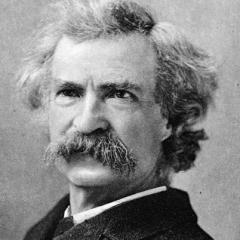
Mark Twain
Mark Twain

Mark Twain, born Samuel Langhorne Clemens, was a renowned American author and humorist in the 19th century. His works are characterized by humor, satire, and profound social insight, with notable novels such as 'The Adventures of Tom Sawyer' and 'The Adventures of Huckleberry Finn'. more

You May Also Like

“Diligence and attention soon gave him the knack of it, and he strode down the street with his mouth full of harmony and his soul full of gratitude. He felt much as an astronomer feels who has discovered a new planet—no doubt, as far as strong, deep, unalloyed pleasure is concerned, the advantage was with the boy, not the astronomer.”

“A Tom Sawyerish figure she imagined growing up on some widwestern farm, reading adventure books and butchering chickens, pulling the braids of milkmaids and leaving his hometown to travel the world; a more devout and sober Hemingway, in search of a deeper meaning, but never losing sight of where he came from.”

“Just at this juncture the boy felt a slow, fateful grip closing on his ear, and a steady lifting impulse. In that vise he was borne across the house and deposited in his own seat, under a peppering fire of giggles from the whole school. Then the master stood over him during a few awful moments, and finally moved away to his throne without saying a word. But although Tom's ear tingled, his heart was jubilant.”

“As the service proceeded, the clergyman drew such pictures of the graces, the winning ways, and the rare promise of the lost lads that every soul there, thinking he recognized these pictures, felt a pang in remembering that he had persistently blinded himself to them always before, and had as persistently seen only faults and flaws in the poor boys. The minister related many a touching incident in the lives of the departed, too, which illustrated their sweet, generous natures, and the people could easily see, now, how noble and beautiful those episodes were, and remembered with grief that at the time they occurred they had seemed rank rascalities, well deserving of the cowhide. The congregation became more and more moved, as the pathetic tale went on, till at last the whole company broke down and joined the weeping mourners in a chorus of anguished sobs, the preacher himself giving way to his feelings, and crying in the pulpit.”

“And now at this moment, when hope was dead, Tom Sawyer came forward with nine yellow tickets, nine red tickets, and ten blue ones, and demanded a Bible. This was a thunderbolt out of a clear sky. Walters was not expecting an application from this source for the next ten years. But there was no getting around it—here were the certified checks, and they were good for their face. Tom was therefore elevated to a place with the Judge and the other elect, and the great news was announced from headquarters. It was the most stunning surprise of the decade, and so profound was the sensation that it lifted the new hero up to the judicial one’s altitude, and the school had two marvels to gaze upon in place of one. The boys were all eaten up with envy—but those that suffered the bitterest pangs were those who perceived too late that they themselves had contributed to this hated splendor by trading tickets to Tom for the wealth he had amassed in selling whitewashing privileges. These despised themselves, as being the dupes of a wily fraud, a guileful snake in the grass.”